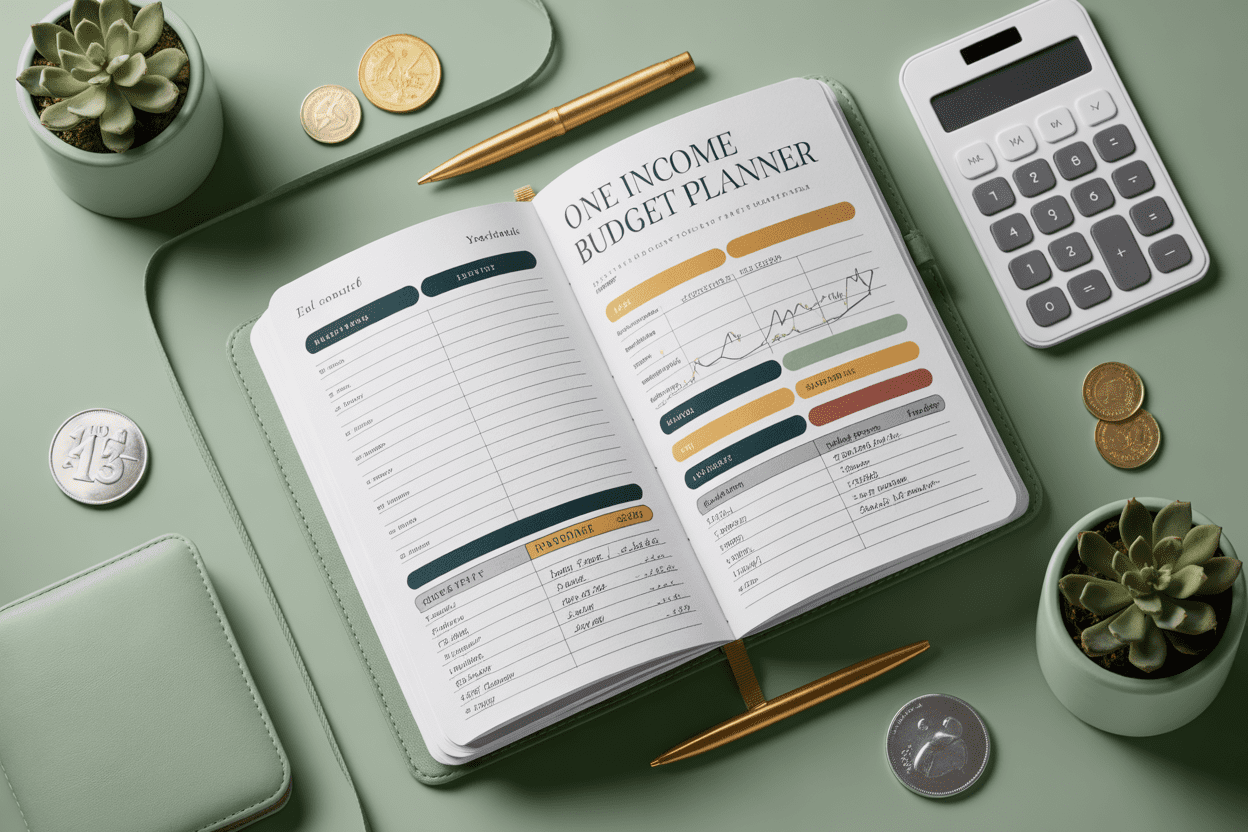
One Income Budget Planner: How to Make One Paycheck Work
Money feels different when one paycheck carries the whole household. Every dollar has a job, and every “treat yourself” moment needs a permission slip. The good news? A smart budget can remove the guesswork and the stress—without forcing you into a joyless existence. Let’s build a budget plan that actually works for one income families and still leaves room for fun.
Why One-Income Budgets Hit Different
One income means less wiggle room and more pressure on planning. You can’t rely on “we’ll make it up next month” because there’s no backup paycheck coming. But that constraint can be a secret superpower.
When you plan intentionally, you spend with confidence. You stop waking up at 3 a.m. wondering if the electric bill will bounce. And FYI, you don’t need complicated spreadsheets to do this right—just a clear plan and a system you’ll actually use.
The Core Budget Framework That Keeps It Simple

You need a structure that fits real life, not a finance textbook. Here’s a clean, realistic system for one-income families.
- Give every dollar a job: This is zero-based budgeting. Income minus spending equals zero. Not zero cash, zero “unassigned.” Every dollar either pays a bill, builds savings, or goes to a fun category on purpose.
- Pick your “must-haves” first: Housing, utilities, groceries, transportation, insurance, minimum debt payments. These get funded before anything else. No exceptions.
- Automate the boring stuff: Auto-draft bills and savings so you don’t rely on willpower. Willpower is great for turning down dessert, not for remembering due dates.
- Use weekly check-ins: One-income budgets thrive on quick touchpoints. Ten minutes each Sunday beats a two-hour panic session once a month.
The 4-Bucket Method
If you hate 27 budget categories, try this:
- Essentials: Rent/mortgage, utilities, groceries, insurance, gas.
- True expenses: Non-monthly stuff—car registration, annual subscriptions, back-to-school, kids’ activities, medical copays.
- Goals: Emergency fund, sinking funds (car repair fund, vacation), debt payoff, retirement.
- Lifestyle: Dining out, entertainment, personal spending, gifts. Yes, this stays—otherwise you’ll rebel. IMO, a budget without joy breaks fast.
Start With Your Real Numbers (Not Fantasy Land)
You can’t budget on vibes. Pull your last 90 days of spending and look at what actually happened.
- Calculate your average net income: After taxes and benefits, what hits your bank each pay period? Multiply to get a reliable monthly baseline.
- List all fixed bills: Rent, insurance, internet, phone, daycare. These don’t move much, so they’re predictable.
- Track variable essentials: Groceries, gas, household supplies. Use the 90-day average as your starting budget, then trim slowly.
- Identify leaks: Random Amazon buys, forgotten subscriptions, delivery fees. Small leaks sink one-income ships fast.
Make Your Paycheck Calendar
Paycheck rhythm matters more when only one check funds everything.
- Map bills to pay dates: Which bills come out of which paycheck? Move due dates if needed so you don’t overload one week.
- Create “first half/second half” budgets: Split variable money (like groceries) by pay period to prevent end-of-month famine.
- Buffer account: Keep one paycheck’s worth of expenses as a cushion. If that’s too big right now, aim for $500, then $1,000, then one month.
Groceries, Utilities, and Other Budget Bullies
Let’s tackle the categories that love to run wild.
Groceries Without the Grocery Guilt
Groceries spike when we shop hungry and without a plan. Classic.
- Pre-plan 5 dinners max: Rotate easy meals you actually cook. Overplanning leads to takeout.
- Use a running pantry list: Build meals around what you already own. That random can of chickpeas? It’s a curry now.
- Shop once per week: Fewer trips, fewer impulse buys. If you can’t trust yourself, order online and do pickup.
- Set a “snacks & extras” cap: Give yourself permission for treats but cap it at a number.
Utilities That Don’t Surprise You
Utilities vary by season, so plan for it.
- Average your last 12 months: Budget that number monthly. Overages go to a “utilities buffer.”
- Small changes matter: LED bulbs, thermostat tweaks, unplug the power vampires. It’s not glamorous, but it works.
- Negotiate or shop rates annually: Internet and insurance love to creep up. Call and ask for loyalty rates. It’s awkward, but the savings add up.
Kids and “Surprise” Costs (That Aren’t Actually Surprises)
You know school pictures and sports fees are coming. Pretend less, plan more.
- Create sinking funds: Back-to-school, activities, clothes, birthday gifts. Contribute monthly, even $20 at a time.
- Buy used first: Gear swaps, thrift, local buy/sell groups. Kids outgrow stuff faster than milk goes bad.
- Cap activities per season: Two working back-to-back weekends to fund travel soccer? Hard pass.
Emergency Fund, Debt, and Future You
You don’t need perfection—you need protection. One income equals more vulnerability, so build your safety net.
Emergency Fund: The Non-Negotiable
Start with $1,000–$2,000 as fast as you can. That handles car repairs and appliance freakouts. Then grow to 3–6 months of essential expenses. If your job feels unstable, aim closer to six.
Where to put it?
- High-yield savings account: Easy access, earns a bit, and stays separate from everyday spending.
- Automate it: Treat it like a bill. You won’t miss what never hits checking.
Debt Payoff That Doesn’t Starve Your Budget
Focus on high-interest debt first. But don’t starve your emergency fund to do it—that’s how you end up back on the credit card.
- Minimums on everything, extra on the target debt: Snowball (smallest balance) for motivation, avalanche (highest rate) for math wins. Pick what keeps you consistent.
- Refinance or consolidate carefully: Only if it lowers your rate and you won’t rack up new balances. Discipline > paperwork.
Retirement on One Income
Yes, you still invest. Future you would like to retire with dignity and nice coffee.
- Grab the employer match first: Free money is the best money.
- Then Roth IRA if eligible: Tax-free growth is lovely. Even $100/month compounds.
- Increase 1% annually: You won’t feel it, but your future balance will.
Make Cash Flow Predictable (And Less Stressy)

When you smooth out cash flow, you sleep better. True story.
Bill Smoothing Tactics
- Annuals to monthlies: Divide annual expenses by 12 and auto-transfer that amount to sinking funds. Goodbye, December car insurance panic.
- Mid-month auto-pay: If one paycheck carries most bills, move some due dates to mid-month so both checks share the load.
- Use “envelope” banking: Separate checking accounts for essentials and lifestyle. When the fun account empties, you’re done spending. No guilt, just facts.
Side Income Without Side Burnout
Not required, but sometimes helpful.
- Pick low-friction gigs: Freelance in your field, after-bedtime shifts, seasonal retail, tutoring. Keep it temporary and targeted.
- Set a purpose: “This extra $300 goes to the emergency fund,” not “more money to spend on vibes.”
- Quit once the target is met: Your time matters. Money is a tool, not a lifestyle.
Cutting Costs Without Killing Joy
You can reduce spending and still enjoy your life. Promise.
- Run a 30-day audit: Highlight every expense that didn’t improve your life. Cancel or replace it.
- Swap, don’t stop: Library over new books, potlucks over dinners out, park meetups over pricey attractions. Cheaper can still be fun.
- Cap the categories with triggers: If dining out derails you, pre-load a separate card with your monthly limit. When it’s gone, you’re done. Built-in boundaries help.
- Plan joy on purpose: Budget a “treat” line. A little latte fund keeps the peace, IMO.
Subscription Sanity Check
Subscriptions breed like rabbits.
- List them all: Streaming, apps, cloud storage, monthly boxes.
- Trim to one per category: One streaming service at a time. Rotate monthly if FOMO hits.
- Use annual deals only if you’d pay monthly anyway: Don’t prepay regret.
Tools and Systems That Actually Work

Pick tools that match your brain, not someone else’s.
- Spreadsheet folks: Simple template with four buckets and a paycheck calendar. Keep it to one tab.
- App lovers: Look for zero-based budgeting, bank sync, and category rollovers. Bonus if it supports shared access for your partner.
- Pen-and-paper people: Envelope system or a budget notebook with weekly check-ins. Manual doesn’t mean messy.
- Bank hacks: Separate accounts for essentials, sinking funds, and lifestyle. Nickname them so you don’t “accidentally” raid the car repair fund for Thai takeout.
Weekly Money Date (10 Minutes)
Make it quick and consistent.
- Check balances: Essentials funded? Any red flags?
- Update transactions: Categorize, adjust, move on.
- Review the next 7 days: Birthdays, renewals, extra gas? Plan now, not later.
Mindset: You’re the CFO, Not the Fun Police
Budgets get a bad reputation because people use them like punishment. That’s a no from me. You’re the Chief Financial Officer of your life. You decide where money goes so your values show up on your calendar.
Yes, you might say no to some things. But you’ll say yes to the right things without guilt. That’s the point. A one-income budget builds flexibility, not restrictions. And if you mess up one week? New week, new you. It’s money, not a moral grade.
FAQ
How much should I keep in my emergency fund on one income?
Start with $1,000–$2,000 as fast as you can. Then build to 3–6 months of essential expenses. If your job varies or you’re self-employed, lean toward six months. Keep it in a high-yield savings account for quick access and a little interest.
What percentage of income should go to housing?
Aim for 25–30% of take-home pay for rent or mortgage. If you’re higher than that, look for ways to reduce—refinance, negotiate rent at renewal, find a roommate temporarily, or downsize. Housing bloat squeezes every other category on a single income.
How do I budget for irregular expenses?
Create sinking funds. List non-monthly costs (car maintenance, holidays, school fees, annual insurance, travel), divide each by 12, and transfer that amount monthly into separate savings buckets. When the bill hits, you pay cash—no drama.
Should I pay off debt before saving?
Do both, strategically. Build a starter emergency fund ($1,000–$2,000) first. Then pay minimums on all debt and funnel extra to high-interest debt while still adding a small amount to savings each month. That prevents new debt when life happens.
How do I budget if my income fluctuates?
Base your budget on your lowest reliable monthly income. Save any extra in a buffer account. Fund essentials first, then true expenses, then goals, then lifestyle. When you have a surplus month, top off sinking funds and your emergency fund.
What if my partner and I disagree on spending?
Agree on the essentials and goals first. Then give each person a small, no-questions-asked personal spending amount. Schedule a weekly 10-minute money check-in so decisions happen calmly, not mid-purchase. Shared priorities + small autonomy = fewer fights.
Conclusion
A one-income budget doesn’t mean a smaller life; it means a clearer one. You decide your essentials, plan for the “surprises,” and still fund joy on purpose. Build simple systems, check in weekly, and protect yourself with an emergency fund. Do that, and your money stops running you—and starts working for you. FYI, that’s the best kind of upgrade.