
Investing on a Budget: How to Start With Little Money
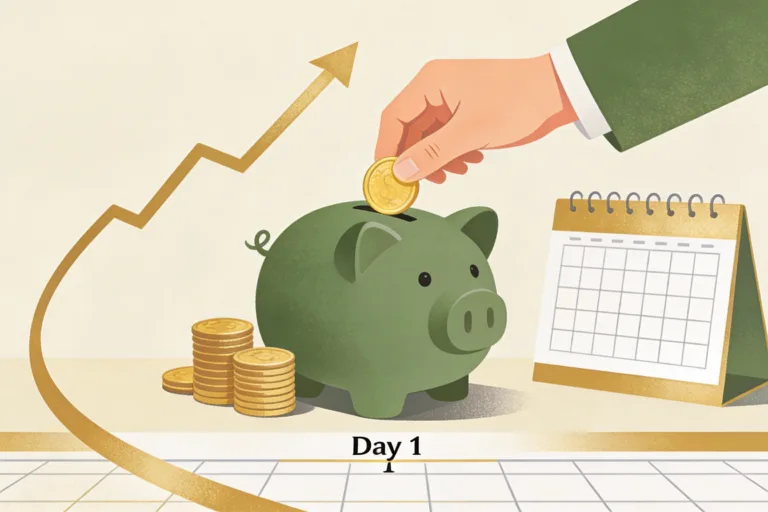
You don’t need a trust fund, a finance degree, or a suit to start investing. You need a plan, a tiny bit of cash, and the patience of a houseplant. The market won’t care how fancy your spreadsheet looks; it will reward consistency and time. Ready to build wealth on a budget without hating every minute? Let’s do this.
Mindset First: You’re Not Late, You’re Early
You might think you missed the boat because you didn’t start five years ago. Stop. The best time to plant a money tree was then, but the second-best time is today. You have the advantage of small steps, low stakes, and a long runway.
Two truths to tattoo on your brain:
- Time beats timing. Compounding turns tiny, regular deposits into a future you’ll brag about.
- Process beats feelings. Automation > vibes. You can’t mood-swing your way to wealth.
Build Your “Permission to Invest” Foundation

Before you throw cash at stocks, give yourself permission to invest by covering the basics. This isn’t gatekeeping; it’s guardrails so you don’t panic-sell the first time your car needs new tires.
- Emergency fund: Aim for $500–$1,000 to start. Build to 3–6 months of expenses eventually.
- High-interest debt: If your credit card charges 20% APR, kill it first. You can dabble with small investments while paying it down, but prioritize debt.
- Budget with wiggle room: You’ll invest better when your budget can handle surprises.
Where to Park the Cushion
Keep your emergency fund in a high-yield savings account. You want safety, not excitement. If your emergency fund feels thrilling, it’s in the wrong place.
Start Small: How Much Is “Enough” to Begin?
People imagine you need $1,000 “just to start.” That’s outdated. Today, platforms let you buy fractional shares with $5. No one will give you a cookie for waiting to hit some imaginary minimum.
Practical starter plan:
- $10–$25 per week (set it on autopilot).
- Increase it anytime your income bumps or a bill disappears.
- Use found money (tax refunds, small bonuses) to pad the account.
FYI: Consistency beats heroic one-time deposits. You’re training a habit, not winning a weekend challenge.
Accounts That Make Your Money Work Harder
Not all investment accounts are created equal. Some come with tax perks that act like rocket fuel for your returns.
Employer 401(k) or 403(b)
If your employer offers a match, grab it first. That match is a 100% return on your contribution, instantly. Contribute enough to get the full match even if you also invest elsewhere. Free money = elite hack.
Roth IRA vs. Traditional IRA
- Roth IRA: You invest post-tax money now and take withdrawals tax-free later. Amazing if you expect your future self to be wealthier (we hope).
- Traditional IRA: You may get a tax deduction today, but you’ll pay taxes in retirement.
On a budget, the Roth IRA is IMO the friendliest: tax-free growth, flexibility, and easier mental math.
Brokerage Account
No tax perks, but ultra-flexible. Perfect for goals under 5–10 years or if you’ve maxed retirement accounts. You can withdraw anytime without weird penalties.
What to Buy: Keep It Boring and Broad
You don’t need to hunt for the next Tesla. Most beginners on a budget win with simple, diversified funds that track the market.
Index Funds and ETFs (Your Best Friends)
These funds spread your money across hundreds or thousands of companies. One purchase, instant diversification. Chef’s kiss.
- Total stock market index fund: Covers the whole U.S. stock market.
- S&P 500 index fund: Tracks 500 large U.S. companies.
- Total international index fund: Adds global flavor outside the U.S.
- Bond fund: Steadies the ride when stocks throw a tantrum.
Low fees matter. A lot. Look for expense ratios under 0.20% if possible. Fees are termites; they eat your house slowly.
Simple Starter Portfolios
- One-fund option: A target-date retirement fund or an all-in-one balanced fund. Set it and forget it.
- Two-fund option: 80% total U.S. stock market + 20% total bond market.
- Three-fund option: U.S. stock + international stock + bonds. Classic, powerful, clean.
Pick one. Don’t overthink it. The market doesn’t award extra points for complexity.
Automation: Your Secret Weapon

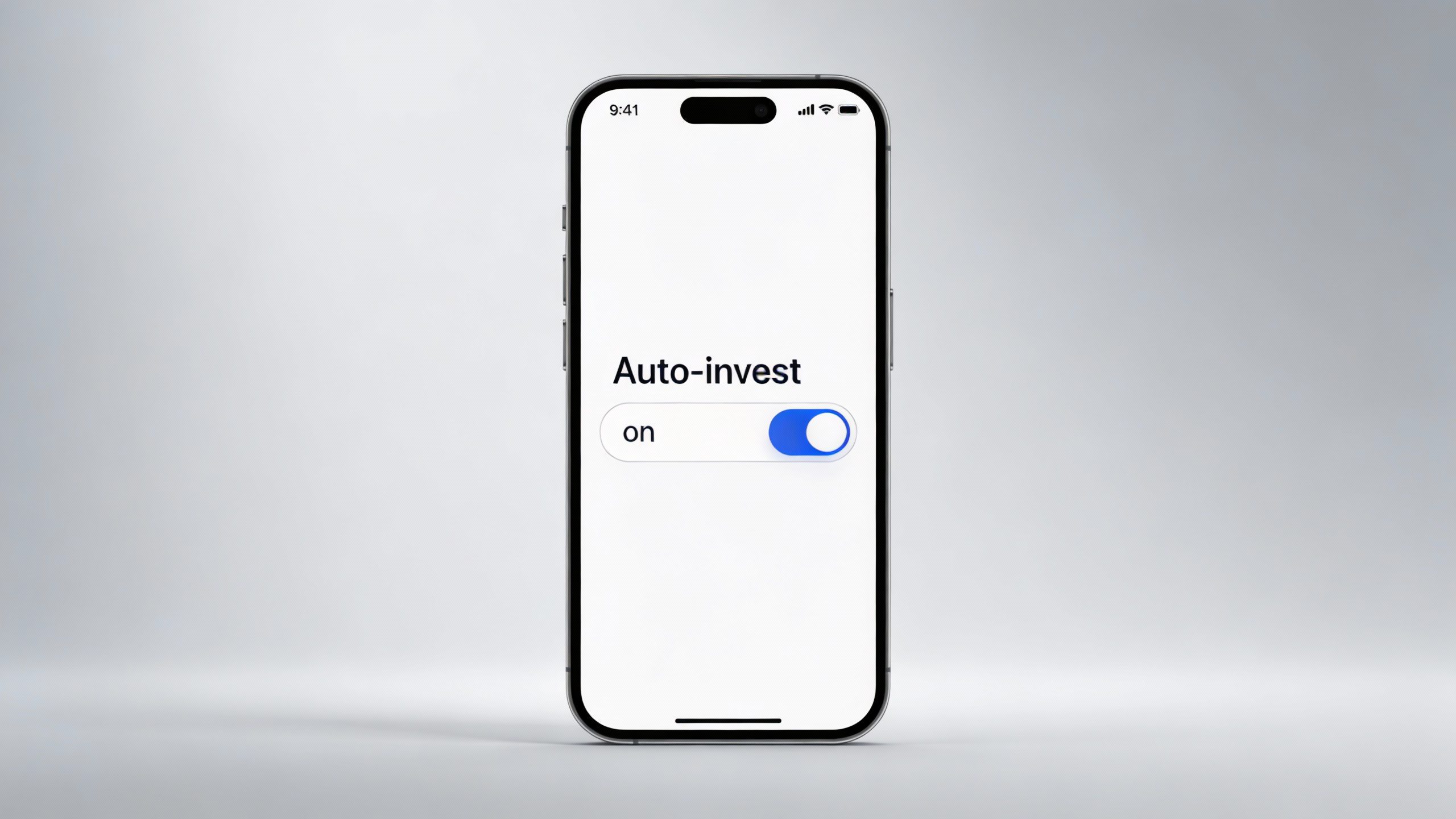
If you must rely on willpower to invest, you’ll lose to pizza and concerts. Automate contributions so investing happens whether you’re disciplined or in a Netflix spiral.
How to Set It Up
- Pick your platform or account (401(k), IRA, or brokerage).
- Set an automatic transfer on payday for your chosen amount.
- Enable automatic purchases of your chosen funds.
- Turn on dividend reinvestment (DRIP) so dividends buy more shares.
Bonus: Automation lets you dollar-cost average, so you buy through highs and lows without drama. It smooths your entry and calms the nerves.
Risk, Reward, and Not Freaking Out
Investing isn’t a straight line. Some months your account will look like a rocket ship. Other months it looks like a dropped elevator. Both are normal.
- Stocks grow long-term but swing wildly short-term.
- Bonds grow slower but soften the blows.
- Cash feels safe but loses value to inflation over time.
Match Risk to Your Timeline
- Under 3 years: Stick to cash or very conservative options. You can’t risk a market dip before a near-term goal.
- 3–10 years: Balance stocks and bonds. Think 60/40 or 70/30 depending on your nerves.
- 10+ years: Go stock-heavy, like 80–100% stocks, if you can handle volatility.
Your biggest risk? Abandoning the plan during a downturn. Volatility is a feature, not a bug.
Fees, Taxes, and Other Boring Stuff That Actually Matters
 Timing” on laptop corner” style=”max-width: 100%; height: auto; border-radius: 8px; box-shadow: 0 4px 8px rgba(0,0,0,0.1);” />
This is unsexy, but it’s where beginners either quietly win or slowly bleed.
Fees to Watch
- Expense ratios: Ongoing fund fees. Keep them low.
- Trade commissions: Many brokers are $0 now. Avoid the ones that aren’t.
- Account fees: Annual maintenance fees? Hard pass.
Tax Basics (Quick and Painless)
- Retirement accounts: Tax advantages now or later. Use them.
- Taxable brokerage: You’ll pay taxes on dividends, interest, and realized gains. Long-term gains (held 1+ years) usually get lower tax rates.
- Tax-loss harvesting: Advanced move to offset gains. Cool, but not required for beginners.
Simple rule: Don’t let the tax tail wag the investing dog. Optimize where you can; invest consistently regardless.
How to Pick a Broker Without Getting Headaches
Choosing a platform shouldn’t feel like shopping for a spaceship. Focus on convenience and basics.
- $0 commissions on stocks and ETFs
- No account minimums
- Automatic investing and dividend reinvestment
- Fractional shares so small amounts still work
- Low-cost index funds available
- Clean interface you won’t dread using
If a platform pushes you toward day trading or options immediately, run. You’re building wealth, not auditioning for a Wall Street movie.
Staying Motivated When Growth Feels Slow
Early investing feels like watching paint dry. Then compounding kicks in, and it’s like watching a snowball roll downhill and turn into a boulder.
Keep yourself engaged:
- Track contributions, not just balance. You control inputs; the market handles the rest.
- Celebrate streaks. “12 months of auto-investing” is a flex.
- Increase contributions with raises. Bump your auto-transfer 1–2% each raise. Set it and “forget it.”
- Ignore market noise. Financial news exists to raise your blood pressure, not your net worth.
IMO, your first $10k is the hardest. After that, you start seeing compounding do real work.
Common Beginner Traps (And How to Dodge Them)
- Chasing hot tips: If your cousin “knows a sure thing,” kindly smile and buy your index fund.
- Trading too often: Activity is not the same as progress. More trades usually mean more mistakes and fees.
- Comparing to others: Your feed shows highlights. Your plan needs blinders.
- Overdiversifying: Owning 27 funds that all track the same stocks wastes time. Keep it simple.
- Ignoring cash flow: If your budget wobbles, fix that first. Investing thrives on stability.
Sample Budget-Friendly Game Plan
Let’s put this together. You can tweak the numbers to fit your life, but the structure works.
- Week 1: Open a Roth IRA or brokerage account. Link your bank. Turn on $20/week auto-transfer.
- Week 2: Choose a low-cost total stock market index fund. Enable dividend reinvestment.
- Week 3: Build a $500 emergency fund. Keep adding $20/week until you hit it.
- Week 4 and beyond: Increase contributions by $5–$10 whenever possible.
- If you have a 401(k): Contribute enough to get the full employer match before funding the IRA. Free money deserves priority.
Want to spice it up? Once your base is solid, add a small “fun money” slice (5–10%) for specific stocks or themes. It keeps you interested without derailing the plan.
FAQ
Should I invest while I still have debt?
Yes, but with nuance. Prioritize high-interest debt (like 20% credit cards). While you crush that, invest enough to get any employer match and maybe a small automatic contribution to build the habit. Once your interest rates drop below typical market returns, you can accelerate investing.
What if I can’t afford to invest much right now?
Start with $5–$10 per week. The amount matters less than building the routine. When your income grows or bills shrink, scale up. Small deposits today teach Future You to handle larger ones effortlessly. FYI: many platforms support fractional shares, so your tiny contributions still buy real pieces of funds.
How do I know if I picked the right fund?
If you chose a broad, low-cost index fund, you’re 90% of the way there. Check the expense ratio (keep it low), the fund’s goal (broad market exposure), and your risk tolerance. If you’re sleeping fine and consistently investing, you picked well. Don’t switch constantly—that’s a stealth tax on returns.
Is now a bad time to start because the market is high/low/weird?
The market always feels weird. That’s its thing. Starting now and sticking to a schedule beats waiting for the “perfect” moment, which never shows up on time. Dollar-cost averaging smooths your entry whether prices are up, down, or doing interpretive dance.
Should I use a robo-advisor?
Robo-advisors can be great for beginners who want automation and rebalancing without tinkering. Check the advisory fee (often 0.25%–0.35%) and compare it to doing it yourself with a target-date or balanced fund. If the simplicity keeps you in the game, the small fee may be worth it, IMO.
When do I add bonds?
Add bonds when you want to reduce volatility or if your timeline shortens. A simple rule: subtract your age from 110 for a rough stock percentage, and put the rest in bonds. Not sacred, but it keeps you from going full YOLO on risk when you shouldn’t.
Conclusion
You don’t need big money to start investing—you need small money, repeatedly. Build your foundation, pick simple low-cost funds, automate everything, and ignore the circus. Your advantage isn’t genius-level stock picks; it’s patience, consistency, and time. Start tiny, keep going, and watch that snowball roll.