
How to Develop a Healthy Money Mindset
Let me guess—you make decent money, but somehow it disappears faster than a Target run on payday. Yeah, been there. I used to think budgeting meant spreadsheets, misery, and never ordering guac. Turns out, the real issue wasn’t my math skills. My mindset around money needed a serious upgrade.
A healthy money mindset doesn’t mean you turn into a frugal monk who reuses paper towels. It means you stop feeling anxious, guilty, or confused about money and start feeling calm, confident, and in control. Sounds nice, right? Let’s talk about how to actually get there—without the fake hustle energy or weird financial shame.
What a Healthy Money Mindset Really Means (No, It’s Not Just “Think Positive”)

A lot of people hear “money mindset” and imagine affirmations whispered to a vision board. That helps some folks, sure. But a healthy money mindset runs way deeper than positive vibes.
You build it when you believe money supports your life instead of controlling it. You stop treating money like an enemy and start using it like a tool. You make decisions from clarity, not panic.
Here’s what that mindset usually looks like in real life:
- You know where your money goes (most of the time).
- You don’t spiral every time a bill shows up.
- You plan without obsessing.
- You spend on what matters and ignore the rest.
IMO, that mental shift matters more than any budgeting app you download.
Why Your Current Money Beliefs Might Be Messing Things Up
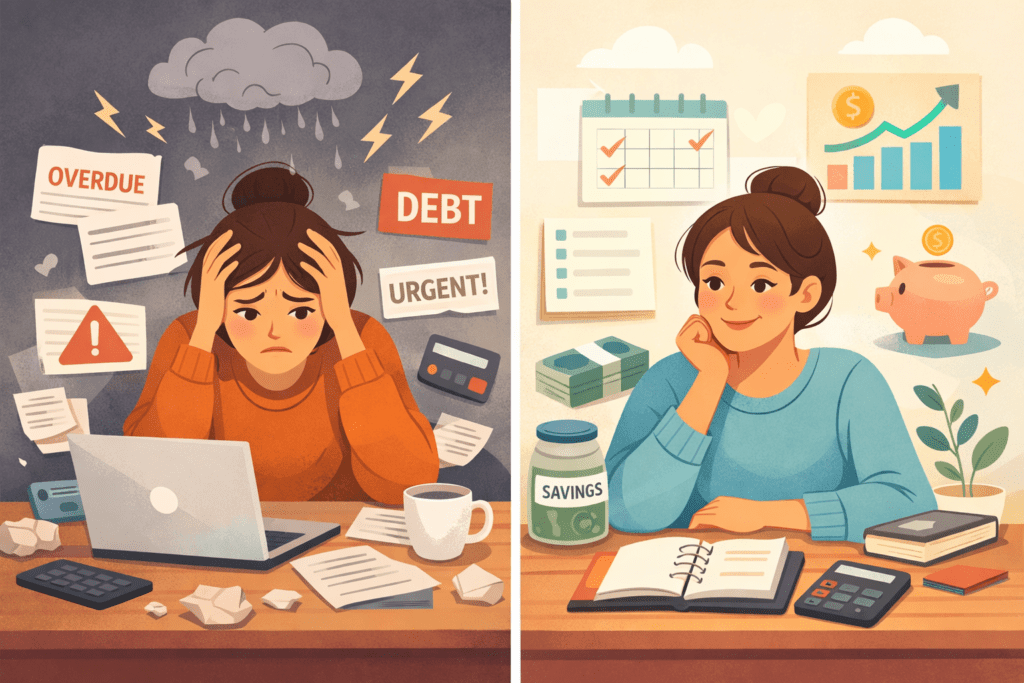
Ever notice how two people can earn the same salary and feel completely different about money? That gap comes from beliefs, not numbers.
Your beliefs usually come from childhood, past mistakes, or cultural noise. Maybe you heard things like “money is evil” or “rich people are greedy.” Maybe you learned that debt equals failure. Those ideas stick, even when they don’t make sense anymore.
Common unhealthy beliefs include:
- “I’m just bad with money.”
- “I’ll never earn enough to relax.”
- “Talking about money feels awkward.”
These beliefs quietly drive your behavior. They push you toward avoidance, overspending, or constant stress. A healthy money mindset starts when you challenge those stories instead of blindly trusting them.
Start With Awareness (Because You Can’t Fix What You Ignore)
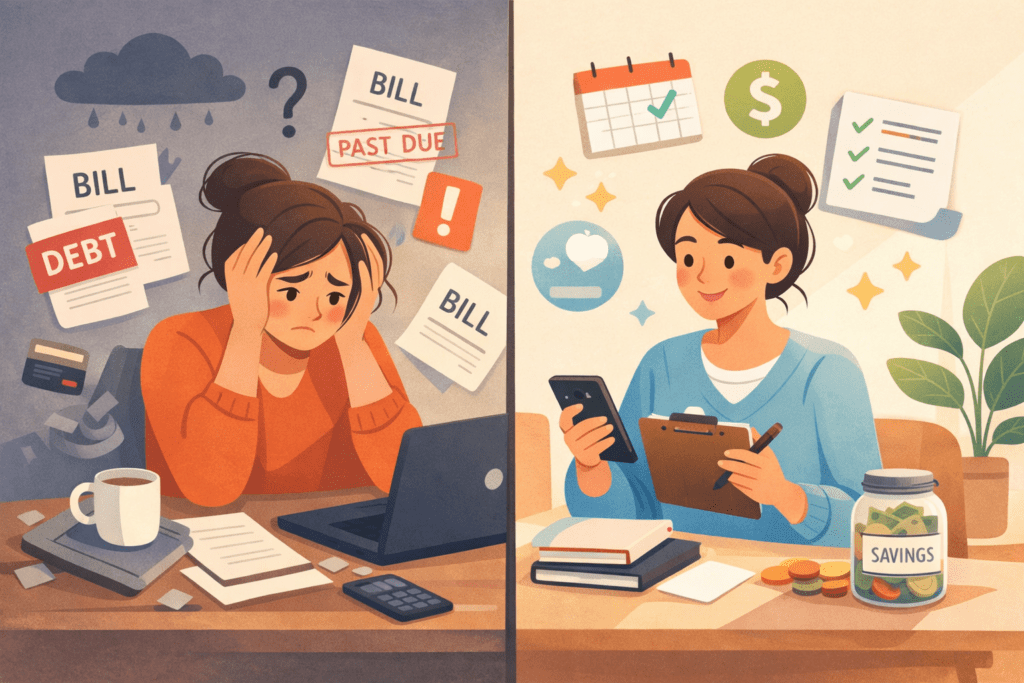
Before you change anything, you need awareness. Not judgment. Not guilt. Just awareness.
I learned this the hard way after avoiding my bank app for weeks. Once I finally looked, nothing exploded. No alarms. Just numbers waiting for attention.
Ask yourself a few honest questions:
- How do I feel when I check my balance?
- Do I avoid money tasks until the last minute?
- Do I use spending as stress relief?
Your answers reveal patterns, not failures. Awareness gives you power. Without it, mindset work turns into wishful thinking.
Separate Self-Worth From Net Worth (Seriously, This One’s Huge)

Let me say this louder for the people in the back: your bank balance does not define your value.
I used to feel like a “better” person when my savings grew and a “worse” one when it dipped. That mindset wrecked my confidence. It also made money way more emotional than it needed to be.
A healthy money mindset draws a hard line between identity and income. You earn more or less at different stages. That’s life, not a moral scorecard.
Try this mental reset:
- Money reflects current circumstances, not character.
- Financial mistakes show learning, not failure.
- Progress beats perfection every single time.
Once you drop the shame, you finally gain clarity.
Redefine What “Rich” Means to You

Most people chase a vague idea of wealth they never defined. That’s like running without knowing the destination. No wonder it feels exhausting.
For me, “rich” means flexibility. I want time, options, and sleep—not luxury cars I stress about insuring.
Your version might include:
- Paying bills without anxiety
- Taking a vacation without credit card regret
- Working less and living more
A healthy money mindset aligns money with your values. You stop copying someone else’s highlight reel and start funding a life you actually enjoy. FYI, that clarity alone reduces impulse spending.
Build Systems Instead of Relying on Motivation
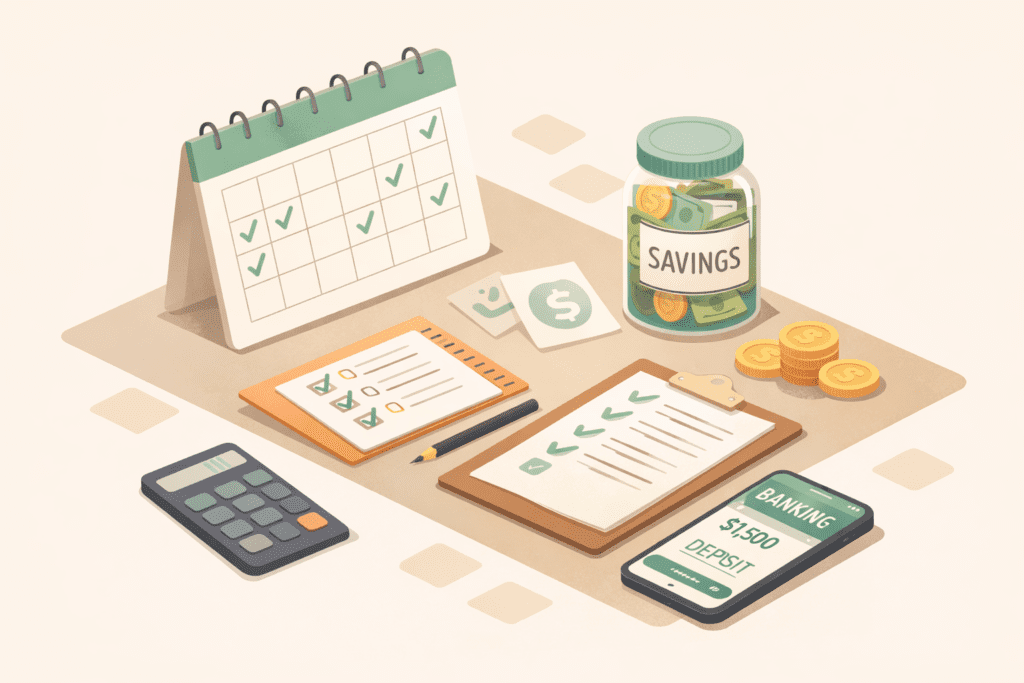
Motivation fades. Systems stick. I learned this after promising myself I’d “just be better next month” for about three years straight.
A system supports your mindset because it removes daily decision fatigue. You don’t rely on willpower. You rely on structure.
Helpful systems include:
- Automatic savings transfers
- Bills on autopay
- Simple spending categories
- Weekly money check-ins (10 minutes, max)
These systems create consistency. Consistency builds confidence. Confidence strengthens your healthy money mindset without constant effort.
Learn to Spend Without Guilt (Yes, That’s Possible)
Some people overspend and feel nothing. Others buy coffee and spiral into shame. Neither extreme helps.
I used to feel guilty about spending on anything “non-essential.” That guilt made money feel restrictive, which pushed me to rebel-spend later. Fun cycle, right? :/
A healthier approach balances intention and enjoyment.
Try this:
- Spend freely on what aligns with your values
- Cut ruthlessly on what doesn’t
- Drop guilt once you decide intentionally
A healthy money mindset allows pleasure without punishment. You don’t need to earn rest or joy through suffering.
Stop Comparing Your Finances to Everyone Else’s
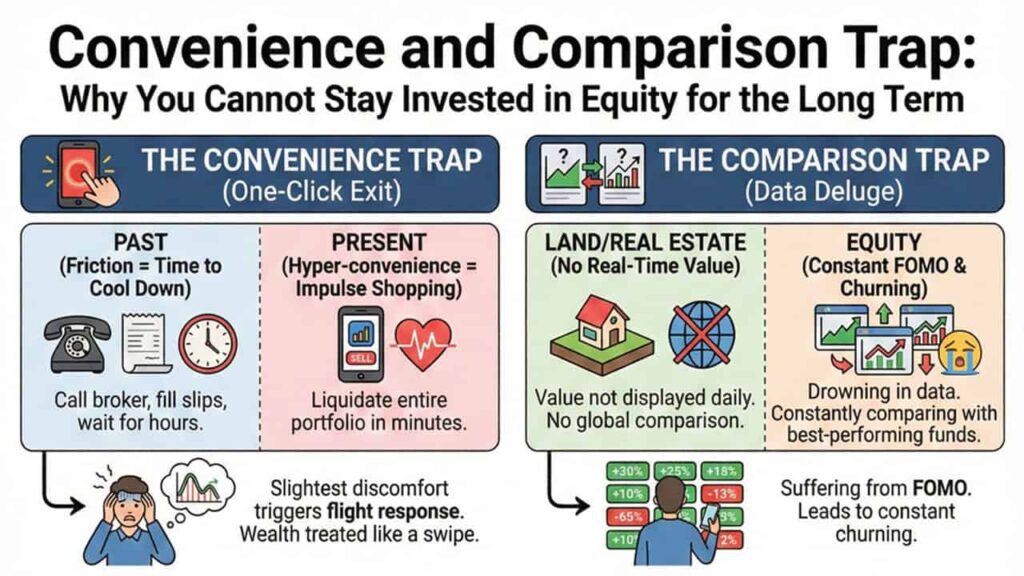
Comparison destroys peace faster than inflation destroys buying power. Social media makes it worse. Everyone looks rich online. No one posts their credit card balance.
I once compared my progress to a friend who “seemed” way ahead. Turns out, they carried massive debt. Comparison gave me stress, not truth.
Protect your mindset by remembering:
- You never see the full picture.
- Timelines differ for everyone.
- Quiet progress still counts.
A healthy money mindset focuses inward. You measure success against your own goals, not someone else’s curated life.
Talk About Money (Even When It Feels Weird)
Money silence breeds confusion. I avoided money conversations for years because they felt awkward. Once I started talking openly, everything improved.
Talking about money helps you:
- Normalize struggles
- Learn faster
- Reduce shame
- Make better decisions
You don’t need to announce your net worth at dinner. Just start with trusted people. A healthy money mindset thrives on clarity, not secrecy.
Replace Fear-Based Decisions With Long-Term Thinking
Fear makes money decisions loud and rushed. Calm thinking makes them strategic.
When fear drives the wheel, you panic-sell investments, hoard cash unnecessarily, or avoid planning altogether. Long-term thinking flips that script.
Practice asking:
- Will this matter in five years?
- Does this choice align with my values?
- Am I reacting or responding?
A healthy money mindset chooses progress over panic. You pause, breathe, and act with intention.
Give Yourself Permission to Grow Slowly
Financial growth rarely happens overnight. Anyone selling “instant wealth” usually sells nonsense.
I made peace with slow progress once I realized consistency beats intensity. Small wins compound fast when you stick around long enough.
Celebrate things like:
- Saving your first $500
- Paying off one annoying bill
- Saying no to an impulse buy
A healthy money mindset respects patience. You build trust with yourself one decision at a time.
Conclusion: Mindset First, Money Second

Here’s the truth most people skip: money gets easier when your mindset gets healthier. Not perfect. Just healthier.
You don’t need extreme discipline or millionaire habits. You need awareness, systems, values, and self-respect. When you treat money like a supportive tool instead of a constant threat, everything shifts.
So start small. Check in with your beliefs. Build simple systems. Spend intentionally. And give yourself some grace along the way.
Money already plays a role in your life—why not make that relationship a good one? 😊