Frugal Living Tips That Actually Work
Let’s be real for a second. Frugal living gets a bad rap. People hear the word “frugal” and instantly picture cold showers, sad dinners, and never having fun again. Yeah… no thanks. 😅
But here’s the truth I learned the hard way: frugal living tips that work don’t make your life miserable—they make it easier. They help you stress less, save more, and still enjoy your coffee. And yes, I still buy coffee. Calm down.
I’ve tried extreme budgeting before. I hated it. I quit in two weeks. What stuck were the simple, realistic habits that didn’t feel like punishment. That’s what we’re talking about today—no nonsense, no monk-level discipline required.
So grab that coffee (homemade or store-bought, I won’t judge). Let’s chat. ☕
What Frugal Living Really Means (Spoiler: It’s Not Being Cheap)
Before we get into tactics, we need to clear something up.
Frugal does not mean cheap. Cheap cuts corners and regrets it later. Frugal thinks ahead and spends with purpose. Big difference.
I learned this after buying a $12 pair of shoes that fell apart in a month. I then bought $60 shoes that lasted three years. Guess which one actually saved money?
Frugal living means:
- Spending money intentionally
- Cutting costs you don’t care about
- Keeping spending where it actually adds joy
Ever wondered why some people save thousands without feeling deprived? Yep, this mindset explains it.
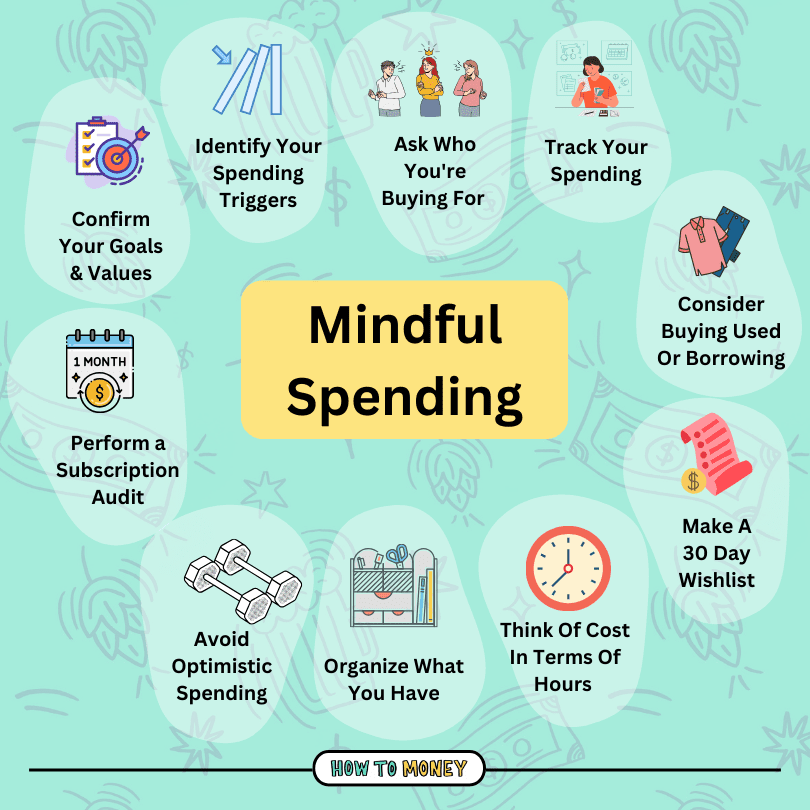
Track Your Spending (Yes, Even the “Small Stuff”)
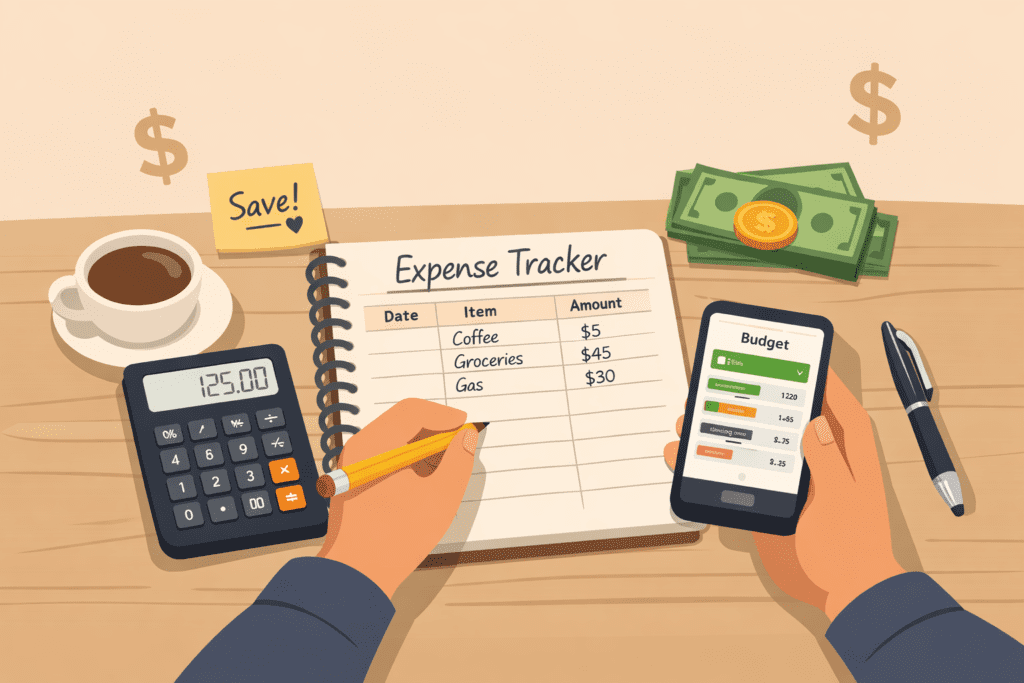
I avoided tracking my spending for years because it felt annoying. Turns out, ignoring numbers doesn’t make them disappear. Rude, right?
Tracking works because you can’t fix what you don’t see.
Why This Tip Actually Works
Small purchases add up faster than you think. A $5 coffee feels harmless—until you realize you buy it five times a week.
I didn’t quit coffee. I just noticed the pattern and adjusted.
Try this simple approach:
- Track every expense for 30 days
- Don’t judge yourself (seriously)
- Look for patterns, not perfection
FYI, this step alone helped me save over $300 a month without changing my lifestyle much.
Create a “Lazy” Budget You’ll Actually Stick To
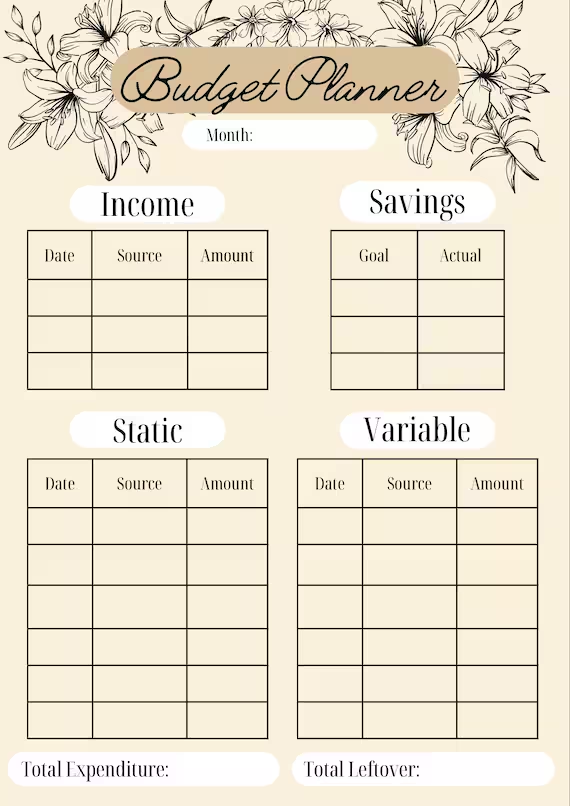
Strict budgets fail because they expect you to act like a robot. You aren’t one. I checked.
Instead, I use what I call a lazy budget. It gives structure without micromanaging every dollar.
How a Lazy Budget Works
You split your money into broad categories instead of line-by-line rules.
Example categories:
- Essentials (rent, groceries, utilities)
- Savings (non-negotiable)
- Guilt-free spending (fun money)
Once I fill those buckets, I stop obsessing. IMO, peace of mind matters more than perfect math.
Ask yourself this: would you rather follow a budget for years—or quit in a month?
Cut Bills Without Touching Your Lifestyle
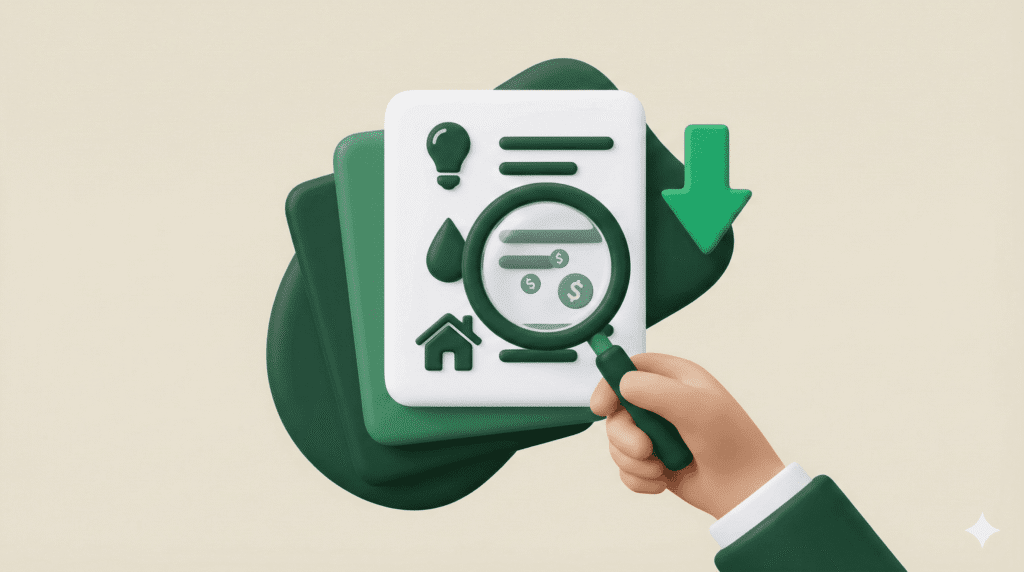
This is my favorite section because it feels like free money. Who doesn’t like that?
You don’t need to cancel everything. You just need to negotiate and optimize.
Bills You Can Usually Lower
- Internet and cable
- Phone plans
- Insurance premiums
- Streaming subscriptions
I once called my internet provider and politely asked for a discount. They gave me one in five minutes. Why didn’t I do that earlier? 🤦♂️
Pro tip: Set a reminder once a year to review recurring bills. This habit alone keeps hundreds in your pocket.
Meal Planning That Doesn’t Kill the Vibe
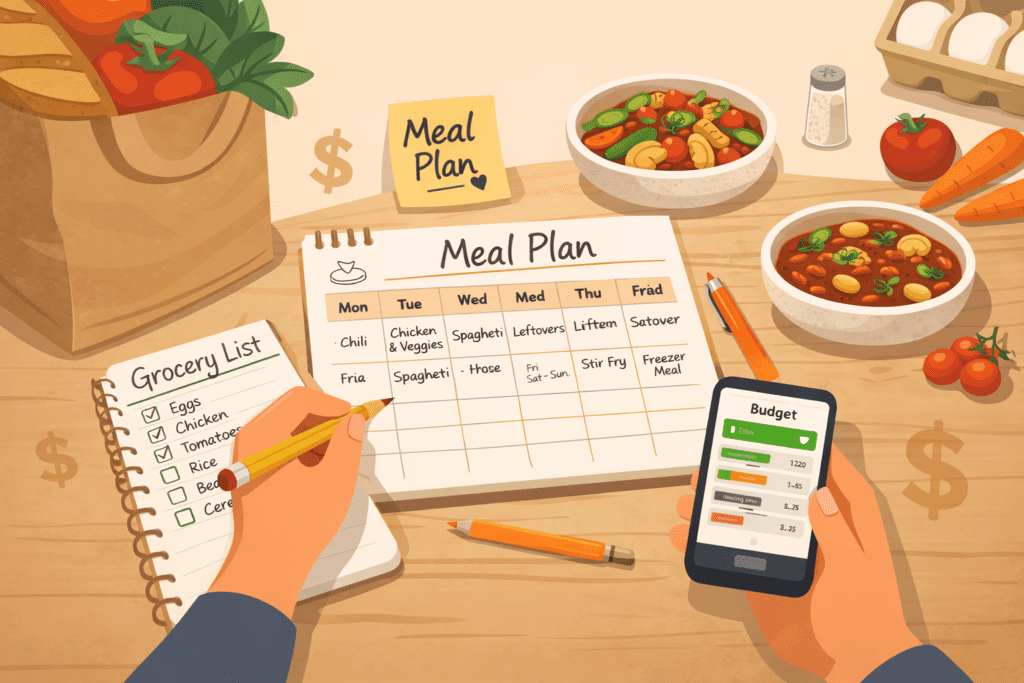
I love food. I also hate wasting it. Meal planning saved me money without turning dinner into a sad event.
The trick? Plan loosely, not obsessively.
How I Keep It Simple
I plan 3–4 dinners per week, not seven. Life happens. Leftovers happen.
What works best:
- Cook larger portions
- Use overlapping ingredients
- Keep easy backup meals
When I stopped eating out “by accident,” my grocery bill dropped fast. Ever opened the fridge and ordered takeout anyway? Yeah… same.
Buy Used Without Feeling Weird About It

Buying used used to feel awkward. Now it feels smart.
You know what’s wild? Most secondhand items barely get used before someone donates them.
Things I Almost Always Buy Used
- Furniture
- Kitchen appliances
- Books
- Gym equipment
I bought a barely-used coffee machine for $40 instead of $150. It still works perfectly. Why pay more just for the box?
If it works, it works. End of story.
Automate Savings So You Don’t “Forget”
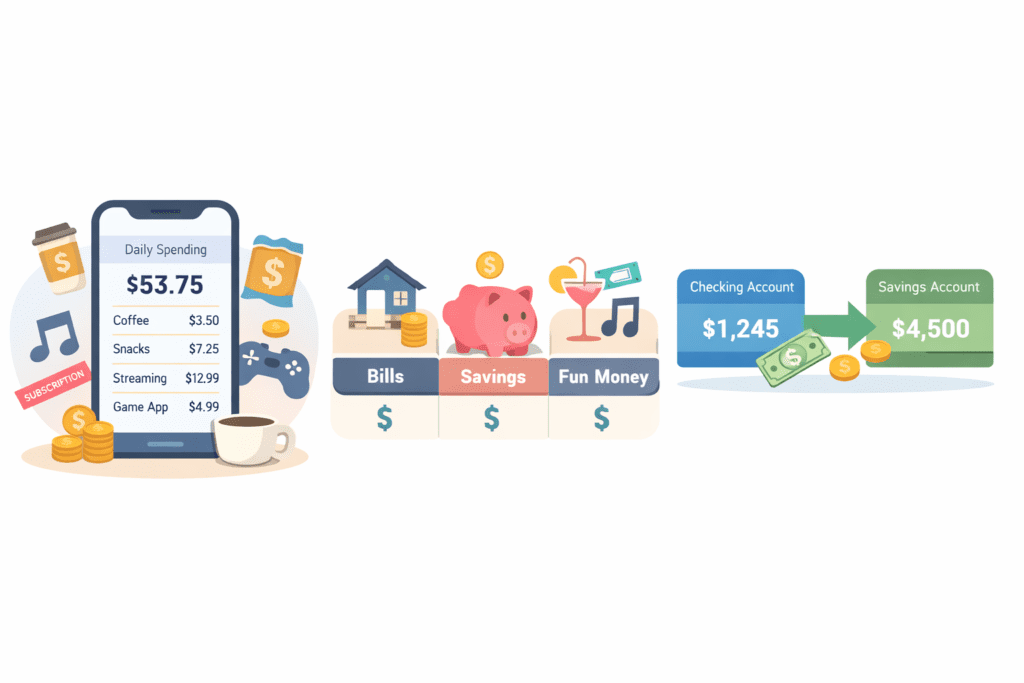
Let’s be honest. If saving depends on motivation, it won’t happen.
Automation changed everything for me.
Why This Works So Well
Money leaves your checking account before you can spend it. Sneaky? Yes. Effective? Also yes.
Set up automatic transfers for:
- Emergency fund
- Retirement savings
- Short-term goals
I treat savings like a bill I owe myself. Miss it? Not an option.
Practice the 24-Hour Rule for Spending

Impulse purchases wreck budgets faster than anything else.
The 24-hour rule saved me from so many “what was I thinking?” moments.
How the Rule Works
If something isn’t essential, wait 24 hours before buying it. That’s it.
About 80% of the time, I forget about the item completely. The other 20%? I buy it guilt-free because I actually want it.
Ever notice how urgency disappears with time? Funny how that works. 🙂
Stop Chasing Deals You Don’t Need
Sales trick you into spending money you never planned to spend. I fell for this more times than I’d like to admit.
A deal only saves money if you already planned to buy the item.
Smarter Way to Shop Sales
- Keep a running wish list
- Buy only when items drop in price
- Ignore “limited-time” pressure
I stopped browsing sales for entertainment. My wallet thanked me.
Focus on Value, Not Just Price
Here’s a mindset shift that changed everything.
Price tells you what you pay. Value tells you what you get.
I gladly pay more for:
- Quality shoes
- Reliable tools
- Things I use daily
I spend less on stuff I barely care about. That balance makes frugal living sustainable.
Ask yourself: will this still matter to me in six months?
Frugal Living Tips That Work Stick Because They Feel Normal
The best frugal habits blend into your life. They don’t announce themselves. They don’t require willpower every day.
That’s why extreme rules fail and simple systems win.
If a tip feels painful, you won’t keep it. Period.
Final Thoughts: Frugal Doesn’t Mean Boring

Let’s wrap this up.
Frugal living tips that work don’t make you feel broke. They make you feel in control. They reduce stress. They give you options.
You don’t need to do everything at once. Pick one or two tips, try them for a month, and build from there.
I promise this: once you see your savings grow without misery, you won’t want to go back. And hey, that coffee will taste even better knowing you paid for it on purpose. 😉
Now tell me—which tip are you trying first?