Daily Habits That Save Money Without Changing Your Life
You don’t need a finance degree or a spreadsheet that looks like mission control. You need a handful of repeatable, low-effort habits that stack up. Think less “deprive yourself” and more “set it and forget it.” Start small, automate the boring parts, and let your routine quietly do the heavy lifting. Ready to keep more of your money without turning into a coupon goblin?
Automate Your Money Before You Can Spend It
You can’t spend what you never see. Set up automatic transfers to savings the same day your paycheck hits. Even $25 per paycheck matters when you do it every time, forever.
Automate your essentials:
- Direct deposit a slice into savings (or two slices into different goals).
- Auto-pay your credit card in full to dodge interest. That’s free money.
- Auto-transfer to a separate “Bills” account so rent, utilities, and insurance stay covered.
Pay Yourself First (For Real)
Treat savings like rent: non-negotiable. Try 10% as a start. If that stings, go 3% and bump it 1% every month. You won’t miss it after a week, IMO.
Make Interest Work For You
Open a high-yield savings account (HYSA). Even 4–5% APY beats the sad 0.01% at old-school banks. Your emergency fund shouldn’t nap in a checking account.
Audit Your Spending in 10 Minutes a Day
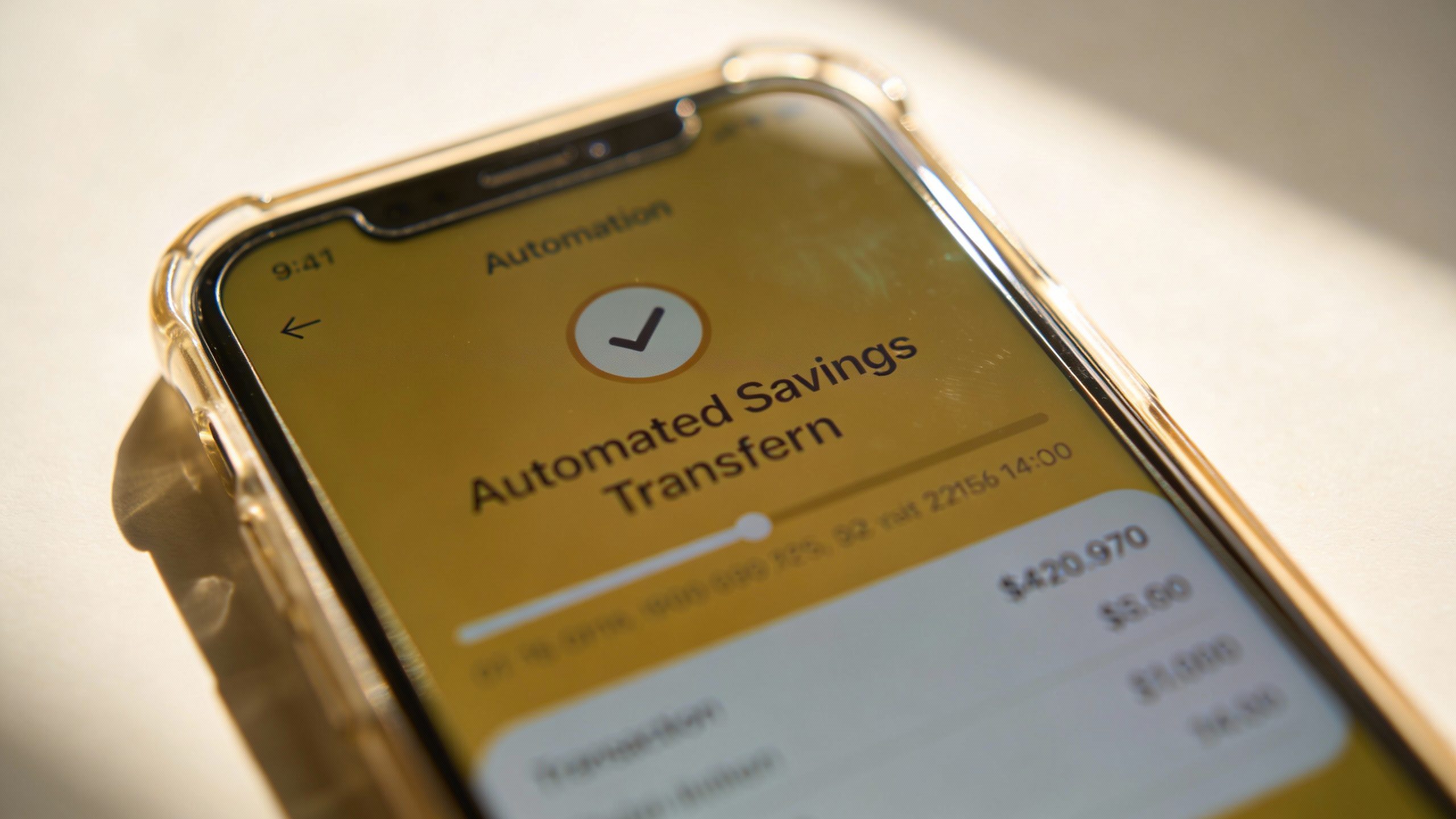
No, you don’t need a fancy budget template. You just need visibility. Check your transactions like you check your DMs—quick, daily, efficient.
Daily 10-minute checklist:
- Open your banking app. Scroll the last 24 hours.
- Tag each expense: Need, Want, or “Why did I do that?”
- Spot recurring charges and ask: still worth it?
This tiny habit kills “mystery money leaks.” You’ll catch the $13 subscription you forgot. You’ll also notice when you tap-to-pay like it’s a reflex.
The Two-Question Rule
Before every purchase, ask:
- Will I still want this in 48 hours?
- Does this beat my current savings goal?
If the answer is “meh” and “no,” walk away. Your future self will send you a thank-you meme.
Build Friction Into Impulse Spending
Spending feels too easy. So make it harder—on purpose. A little friction saves a lot.
Simple friction moves:
- Delete saved cards from shopping sites. Manually typing numbers gives you “Do I need this?” time.
- Turn off one-click checkout. It’s convenient for them, not for your wallet.
- Leave the store without buying. If you still want it in 48 hours, go back.
The 24/48 Rule, Upgraded
Set a phone reminder: “Still want this?” for non-essentials over $50. For big-ticket items (over $200), make it 72 hours. Most “must-haves” become “lol nvm.”
Meal Habits That Save (Without Sad Desk Salads)
Food spending sneaks up like a ninja. You don’t need to cook like a chef. You just need a system that beats takeout on cost and time.
Three quick habits:
- Prep once, eat thrice. Cook a big base (rice, quinoa, roasted veggies, chicken) on Sundays.
- Default lunch: a 5-minute assembly you actually like. Make it boring-good, not boring-bad.
- Have a “panic drawer” with tuna packs, instant rice, and frozen veggies. Emergency meals stop $30 deliveries.
The $3 Coffee Debate (Here’s the middle ground)
You don’t need to quit coffee; you need to quit $6 coffee every day. Make it at home most days. Save café runs for Fridays or meetups. FYI: monthly savings from brewing at home can hit $80–$120 without your life collapsing.
Groceries: Buy Like a Pro
- Shop your pantry first. Build meals around what you already have.
- Use a running grocery list. No list = random chaos and $12 gourmet cheese you didn’t need.
- Go bulk on staples. Rice, beans, oats, pasta, canned tomatoes. They’re cheap superheroes.
- Buy produce you’ll actually eat. Two apples > a carton of vibes that goes slimy by Thursday.
Negotiate and Optimize Your Bills
You can lower bills without changing your lifestyle. Call your providers once every 6–12 months. Ask for promotions. Mention competitors. Channel your inner polite but relentless customer.
Targets you can usually reduce:
- Internet: threaten to switch. Magically, new rates appear.
- Phone plans: switch to MVNOs for big savings with the same towers.
- Insurance: shop around yearly and bundle where it makes sense.
- Subscriptions: cut shared ones or rotate monthly. You don’t need five streaming services forever.
The 15-Minute Script
Try: “I’ve been a customer for X years. My bill keeps climbing. I want to stay, but Competitor offers Y rate. What can you do to keep me?” Then stop talking. Silence does wonders.
Use “Micro-Goals” to Keep Motivation High
Big goals feel overwhelming. Micro-goals feel winnable—and wins keep you going. Build quick hits into your routine.
Micro-goal ideas:
- “No-spend weekdays,” with weekends free for one treat.
- Round up every purchase and auto-save the difference.
- Cash-stuffing for categories you overspend on (coffee, rideshares, takeout).
- One-in-one-out rule for clothes or gadgets.
Gamify It
Create a “streak” chart. Every day you pack lunch, add $5 to savings. Hit 10 days? Reward yourself with something small and planned. Tiny dopamine hits beat sheer willpower, IMO.
Make Your Environment Do the Work
Your environment either helps you save or helps you spend. Set it up to nudge you in the right direction.
High-impact environment tweaks:
- Unsubscribe from promotional emails. Less temptation, fewer “limited time!” lies.
- Move shopping apps off your home screen. Hide them in a folder named “Do You Really Need This?”
- Keep a water bottle and snacks handy. Most random purchases start with “I’m hungry and unprepared.”
- Put your savings goal where you can see it: phone lock screen, fridge, desk.
The Accountability Trick
Tell one friend your monthly savings target. Send them a weekly update. You’ll try harder when someone’s watching. Human brains are weird like that, but let’s use it.
Turn Transportation Into a Savings Engine
You don’t need to sell your car and move to a cabin. Just tweak the routine.
Simple transport swaps:
- Batch errands to one trip a week. Fewer miles, less gas.
- Carpool when possible. Rotate who drives. Less fuel, more gossip.
- Walk or bike short distances. Your wallet and heart will high-five.
- Keep tires inflated and follow maintenance basics. It’s boring and it saves real money.
Transit Pass Math
If you ride transit 3–4 days a week, a monthly pass often beats pay-per-ride. Do the math once, set it, forget it.
Protect Your Savings From Yourself
You’ll hit rough days. Make it harder to raid your savings during an “I deserve it” spiral.
Protection strategies:
- Use a separate bank for your emergency fund. Out of sight, out of swipe range.
- Turn off overdraft. If the money isn’t there, the purchase isn’t either.
- Nickname your accounts: “Paris Trip,” “Debt-Free 2026,” “Peace of Mind.” You’ll think twice before stealing from “Peace of Mind.”
Windfalls Have a Job
Tax refund? Bonus? Side-gig payout? Decide the split ahead of time: 50% to savings, 30% to debt, 20% fun. You still enjoy it, but future-you gets paid.
FAQ
How do I save when my income feels too tight already?
Start microscopic. Save $5 a week automatically. Trim one recurring bill. Prep one meal instead of ordering once. The goal isn’t perfection—it’s momentum. Once you see wins, you’ll find more places to cut without misery.
Is budgeting necessary, or can I just track spending?
You can start with tracking only. Visibility alone changes behavior. After a month, create a simple budget with 3 buckets: Needs, Wants, Savings/Debt. Keep it flexible and revise monthly. Rigid budgets often fail because life exists.
What’s the fastest daily habit that saves the most?
Automating transfers the day you get paid. It moves money before temptation hits and builds savings quietly in the background. Pair it with a 10-minute daily transaction check for maximum impact.
Do small amounts even matter long-term?
Yes. Savings behaves like compound interest and habit stacking. $5 here, $10 there, every week, for years, adds up. Add a high-yield account and occasional windfalls, and your “small” becomes “wow” surprisingly fast.
How do I save on groceries without extreme couponing?
Plan 3 anchor meals, shop your pantry first, make a list, and buy store brands. Cook once for multiple meals. Use frozen produce for longevity and price. No binder full of coupons required—unless that’s your thing, in which case, go off.
Should I focus on debt or saving?
Do both, strategically. Build a mini emergency fund first ($500–$1,000). Then pay high-interest debt aggressively while keeping a small automatic transfer to savings so you maintain the habit. Once debt drops, redirect those payments to savings.
Conclusion
Saving money isn’t about perfection, it’s about repeatable moves that work even on your lazy days. Automate the essentials, build tiny frictions into spending, and let your environment nudge you toward better choices. Stack these habits and you’ll watch your balance grow without living like a monk. Small steps, every day—your bank account (and future you) will love you for it.