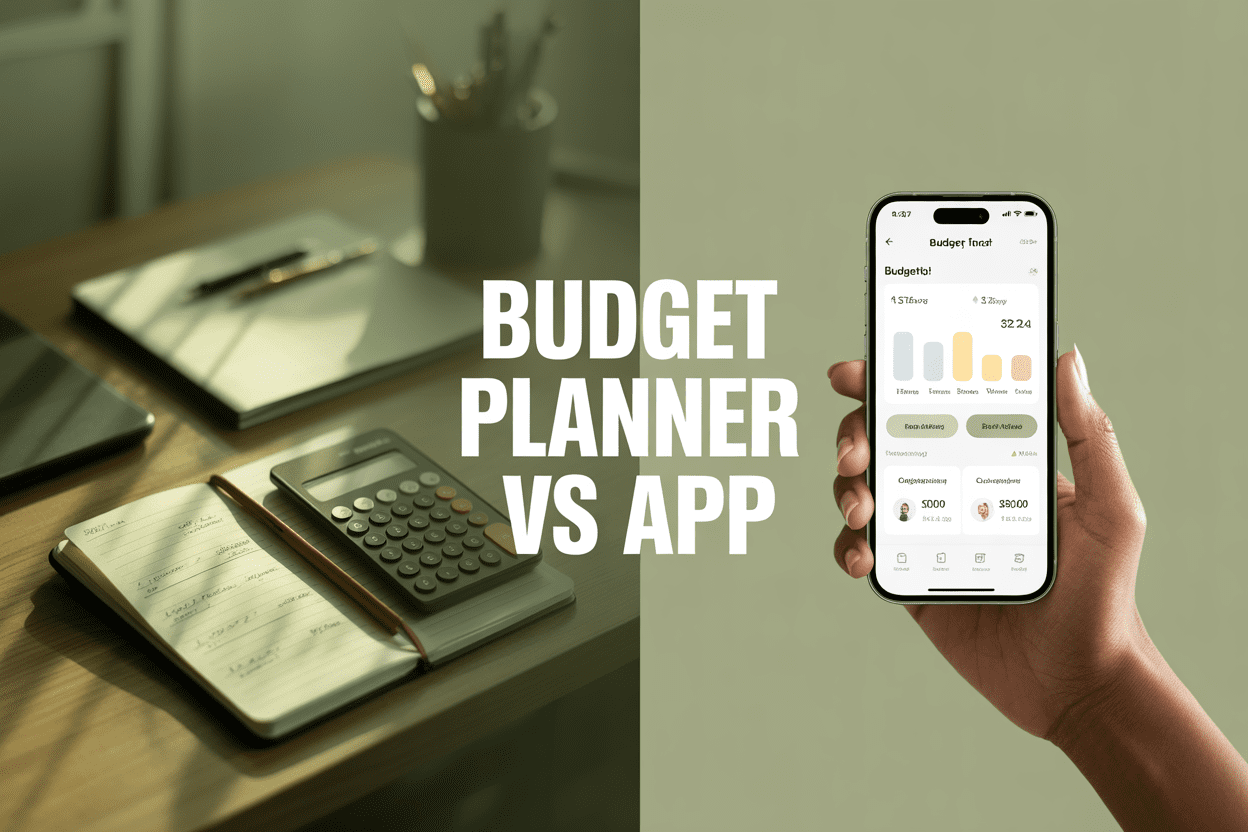
Budget Planner vs Budget App: Which Is Better?
💸 Let’s be real for a second.
If your money ever stared back at you like, “Where did I go?”, you’re exactly who this article is for.
A few years ago, I thought budgeting meant checking my bank balance, shrugging, and praying. Spoiler alert: that did not work. I bounced between a cute paper planner, then a flashy app, then back again. That back-and-forth is what led me to this question—budget planner vs app—which actually wins?
So grab your coffee, your calculator, or your chaos brain. Let’s talk money in a fun, honest, and actually useful way.
What a Budget Planner Really Is
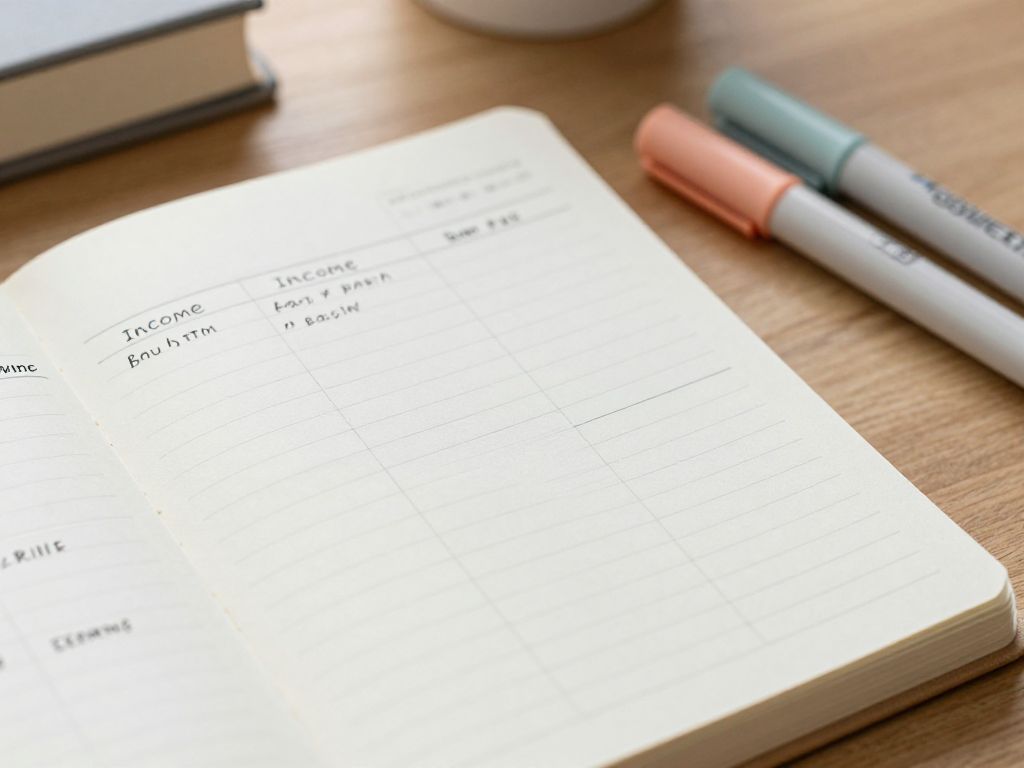
When people say “budget planner,” they usually mean a paper or printable system where you manually track income, expenses, and savings.
Think pretty notebooks, colorful pens, and those satisfying little checkboxes.
How it works
You sit down, open your planner, and write things like:
- Income: $3,200
- Rent: $1,200
- Groceries: $350
- Fun money: $150
Then you physically subtract and adjust.
Feels old-school? Yes. Feels powerful? Also yes.
Why people love planners

Here’s why planners still have a cult following:
- You stay deeply aware of your spending.
- No apps, no distractions, no ads.
- You build a real habit with your money.
- It feels calming instead of stressful. 📒✨
When I used a planner, I noticed something wild. I stopped overspending because I saw every dollar leave my hands.
Ever noticed how swiping a card feels less real than writing “-$75 takeout”? Exactly.
The downsides (and they’re real)
Let’s keep it honest.
- It takes time.
- You can make math mistakes.
- No automatic bank syncing.
- Not great for super busy people.
If you hate math or forget to update your planner, it can become a dusty notebook of guilt.
Been there. No shame.
What a Budget App Actually Does
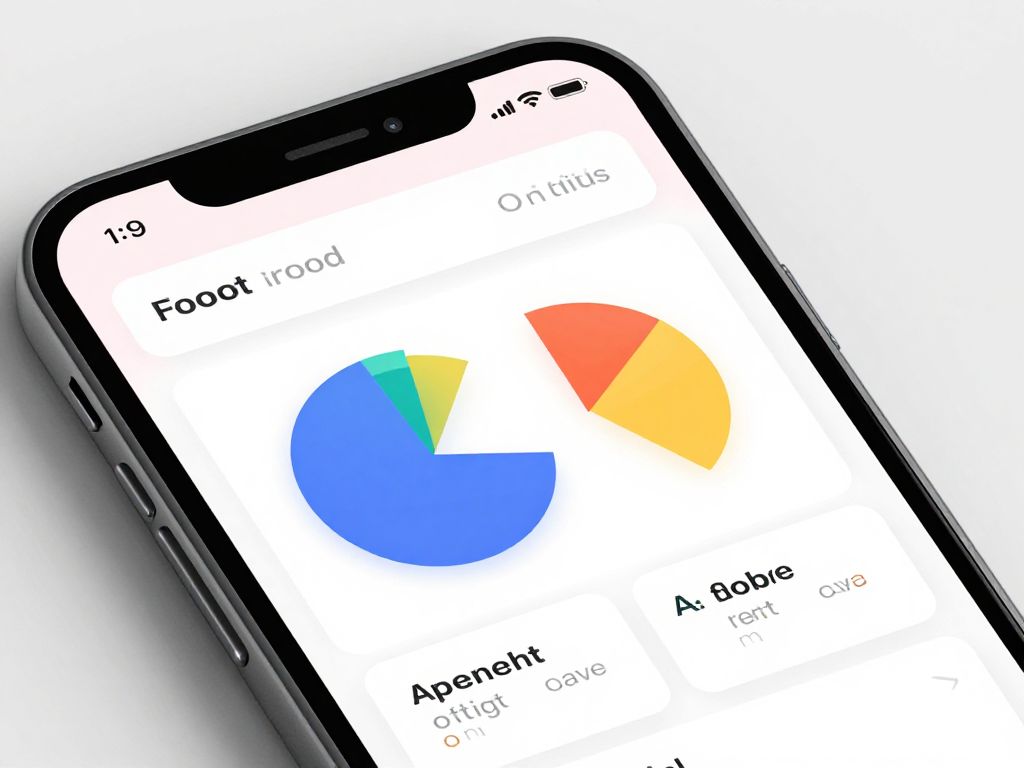
Now let’s talk tech.
Budget apps like Mint, YNAB, EveryDollar, or Monarch connect directly to your bank accounts and track everything automatically.
Your spending pops up in real time like:
“You spent $9.87 at Starbucks.”
And your app side-eyes you immediately. ☕📱
What makes apps attractive
Here’s why so many people swear by them:
- Automatic tracking = zero effort.
- Real-time alerts when you overspend.
- Visual graphs that make money easy to understand.
- You can budget on the go.
I remember the first time my app showed a pie chart of my spending. I literally said, “Oh wow… so that’s why I’m broke.”
Rhetorical question time: Have you ever seen your “eating out” category and felt personally attacked? Same.
Where apps fall short
Apps are powerful, but not perfect.
- They can feel overwhelming.
- You might stop paying attention.
- Privacy concerns freak some people out.
- Subscriptions can cost $50–$100 per year.
If you rely too much on automation, you might lose the emotional connection to your money.
And that’s where overspending sneaks back in.
Budget Planner vs App: Side-by-Side Comparison
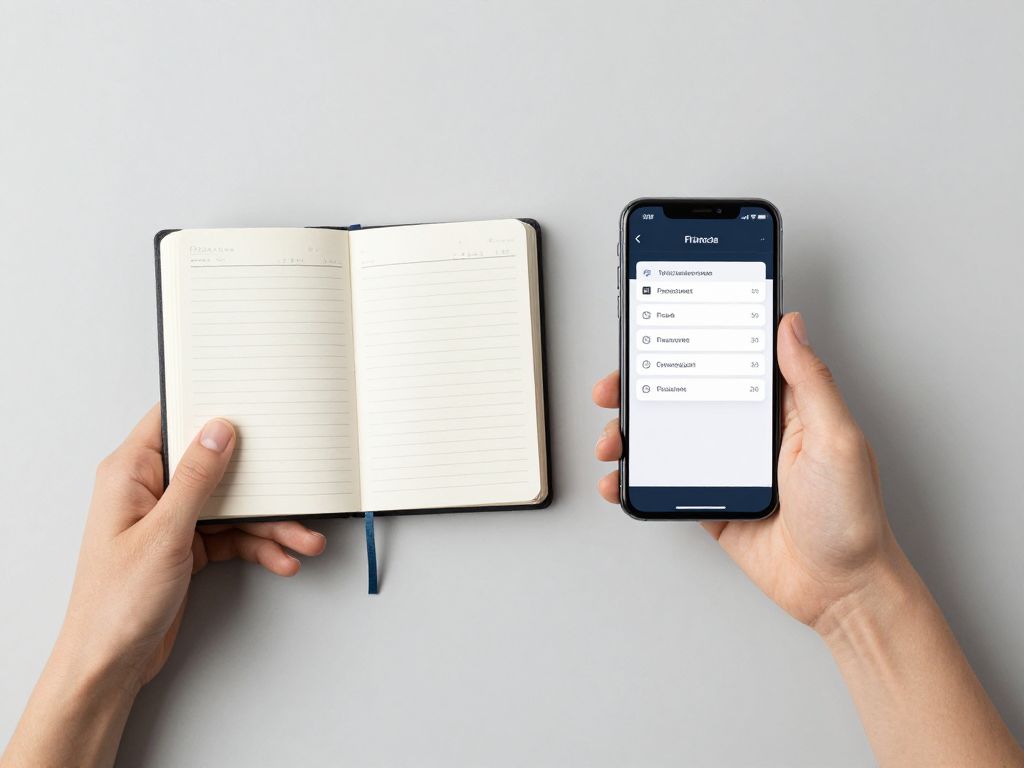
Let’s break this down clearly so you can actually decide.
Ease of use
- Planner: Simple but time-consuming.
- App: Fast but sometimes complicated.
If you like slow, mindful routines, go planner.
If you like efficiency, go app.
Accountability
- Planner = stronger self-awareness.
- App = stronger data tracking.
Which do you trust more: your brain or your phone?
Be honest.
Cost
- Planner: $10–$30 one-time purchase.
- App: Free to $8–$12 per month.
If you hate subscriptions, planners win here.
Accuracy
- Planner: Depends on your math skills.
- App: Almost always accurate.
FYI, my planner era included a lot of “wait… that doesn’t add up.”
Who Should Choose a Budget Planner?
If any of these sound like you, a planner might be your soulmate:
- You love journaling or writing.
- You get overwhelmed by technology.
- You want to slow down with money.
- You prefer privacy over automation.
- You like colorful pens (valid).
When I used a planner, I felt more in control, even if it took longer.
It felt personal, not mechanical.
Who Should Choose a Budget App?

Apps shine for people who:
- Work long hours.
- Hate manual tracking.
- Want instant insights.
- Travel often or use multiple cards.
- Need reminders and alerts.
If your life moves fast, an app keeps up.
Ever tried to track expenses while juggling work, kids, and laundry? Yeah… that’s app territory.
The Hybrid Method (Best of Both Worlds?)
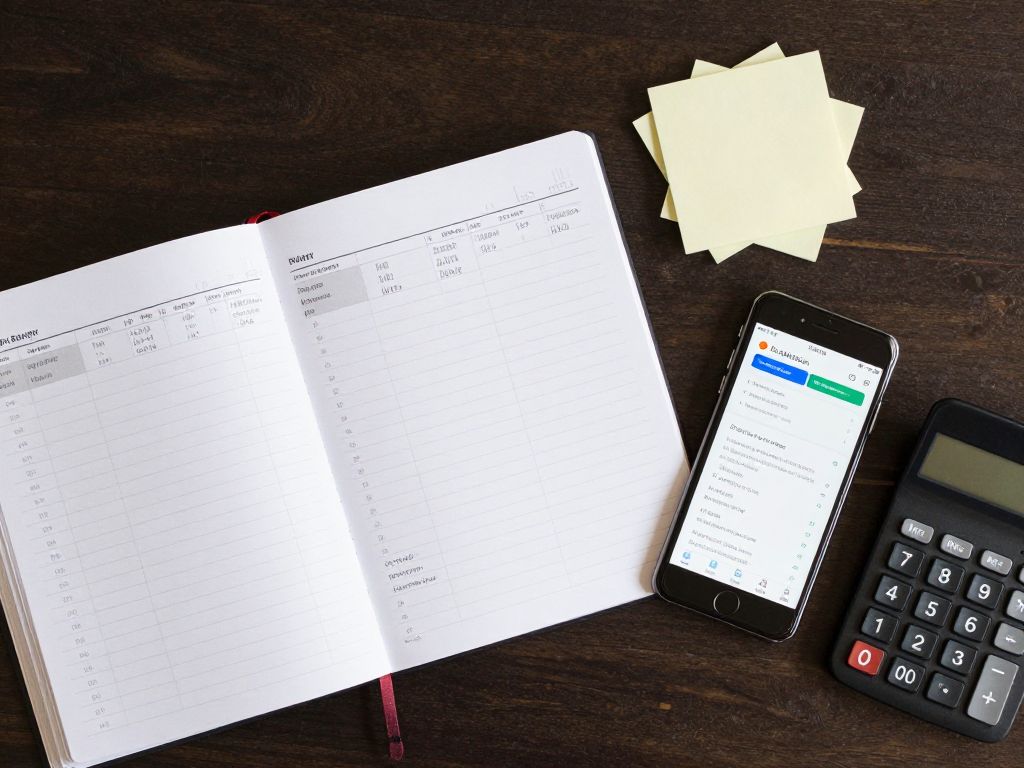
Here’s a plot twist: you don’t actually have to pick just one.
You can use both a planner and an app.
How this works in real life
- Use your app to track daily spending automatically.
- Use your planner once a week to review and reflect.
This combo gives you:
- Accuracy from tech
- Awareness from writing
IMO, this is low-key the smartest setup. 🙂
I started doing this last year, and my savings actually improved.
Coincidence? I think not.
Which One Actually Saves More Money?
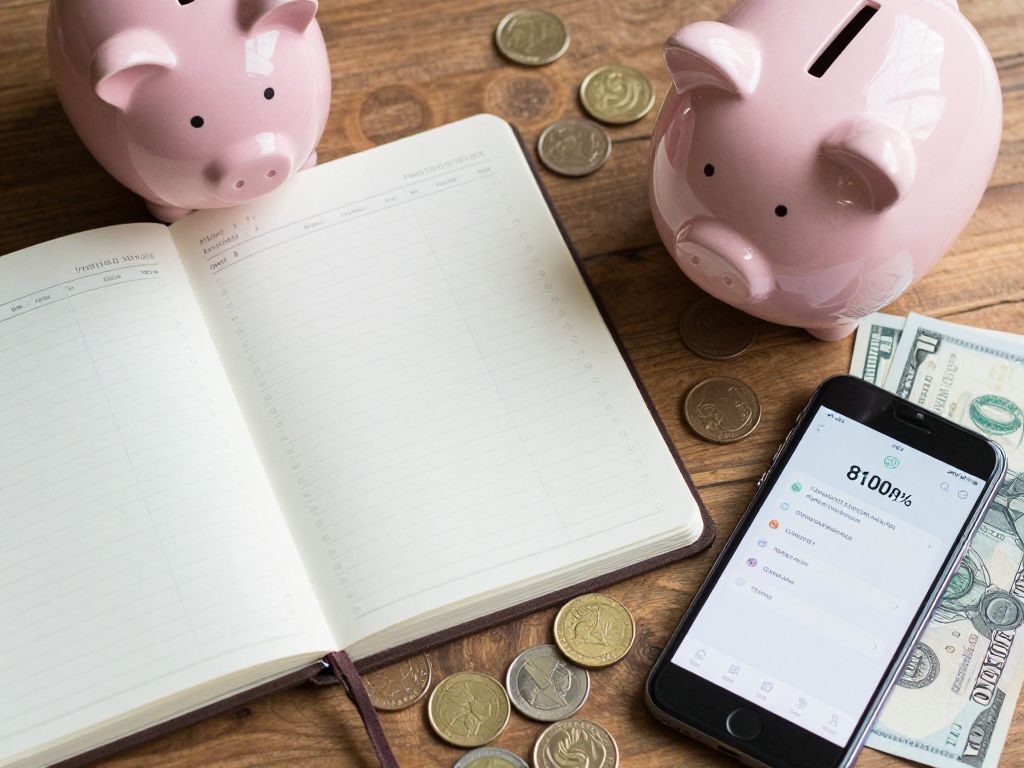
Short answer: neither alone.
What saves money is your behavior, not the tool.
But tools shape behavior.
- Planners make you more mindful.
- Apps make you more consistent.
If you overspend emotionally, choose a planner.
If you overspend out of forgetfulness, choose an app.
Makes sense, right?
Budgeting for Different Money Goals
Your choice might depend on what you’re saving for.
If you want to build an emergency fund
A planner works beautifully because you visually see your progress.
Watching $1,000 grow page by page hits different.
If you want to pay off debt
Apps like YNAB or EveryDollar can track payments and interest in real time.
Less mental math, more momentum.
If you want to invest
Apps integrate with bank accounts and investments better than paper ever could.
But you can still map goals in a planner.
Common Myths About Planners and Apps
Let’s bust a few myths.
Myth 1: “Planners are outdated.”
False. They’re intentional, not outdated.
Myth 2: “Apps will magically fix your money.”
Also false. You still have to make choices.
Myth 3: “You need to be good at math.”
Nope. Both tools guide you.
Budgeting is about habits, not calculus.
How to Choose in 10 Minutes
Ask yourself these three questions:
- Do I hate paperwork?
- Yes → pick an app.
- No → try a planner.
- Do I check my phone constantly?
- Yes → app fits your life.
- No → planner might be better.
- Do I need structure or flexibility?
- Structure → planner
- Flexibility → app
Simple, right?
My Personal Take (Real Talk)
If you forced me to pick just one today?
I’d choose an app for daily tracking and a planner for weekly reflection.
But if you want a single winner in the classic budget planner vs app debate?
Here’s my honest verdict:
👉 Beginners = planner.
👉 Busy pros = app.
Why? Because beginners need awareness first. Speed comes later.
Ever tried running before learning to walk? Same idea.
Quick Pros and Cons Recap
Budget Planner – Pros
- More mindful spending
- No fees, no tech issues
- Better emotional connection to money
Budget Planner – Cons
- Time-consuming
- Prone to math errors
- Not real-time
Budget App – Pros
- Automatic tracking
- Instant alerts
- Great visuals
Budget App – Cons
- Can feel overwhelming
- Subscription costs
- Less emotional engagement
Final Thoughts: So… Which Is Better?
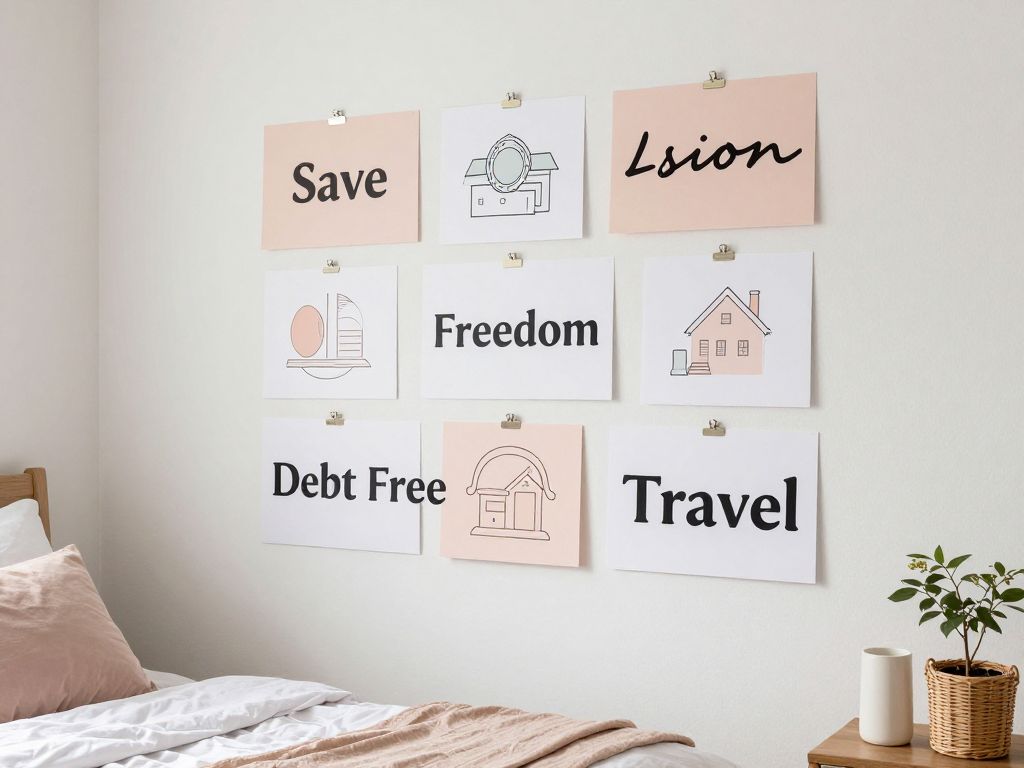
There is no universal winner.
The better tool is the one you will actually use.
If a planner feels cozy and motivating, go with that.
If an app feels convenient and powerful, stick with it.
But here’s the real takeaway:
Your money grows when your habits grow. 🌱
Whether you use a notebook, a phone, or both—show up, stay consistent, and keep learning.
And next time your bank balance gives you that side-eye?
Smile, open your planner or app, and say, “I’ve got you.”
Ready to pick your side?