The Easiest Beginner Debt Payoff Plan That Actually Works
Debt feels heavy until you give it a simple plan. You don’t need a finance degree or a color-coded spreadsheet to get started. You just need a clear path, a few small habits, and the guts to follow through. Let’s cut the fluff and build a plan you can actually stick to.
Know Your Numbers (Yes, All of Them)
If you don’t know what you owe, you can’t beat it. Pull everything together: credit cards, personal loans, car loans, student loans, medical bills—everything. No hiding.
- Balance: How much you owe today
- Interest rate (APR): How expensive that debt is
- Minimum payment: What keeps the account current
- Due date: So you never pay late penalties again
Put it all on one page. If you feel queasy, that’s normal. It’s just information. You’re already doing better than yesterday.
Set Up Autopilot for Minimums
You don’t want late fees hijacking your progress. Set automatic payments for every minimum. That frees your brain for the real battle: the extra payment that actually crushes balances.
Pick Your Payoff Strategy: Avalanche vs. Snowball

You’ve got two proven approaches. Neither is “wrong.” Pick the one you’ll stick to.
- Debt Avalanche: Pay extra on the highest interest rate first. You’ll save the most money long-term. Mathematically beautiful.
- Debt Snowball: Pay extra on the smallest balance first. You’ll get quick wins and major motivation. Psychologically beautiful.
IMO, if you feel fired up by small wins, go Snowball. If you love squeezing every penny out of interest, go Avalanche. FYI, you can switch later if your motivation dips. Your plan serves you—not the other way around.
How to Execute (Step-by-Step)
- List debts by your chosen order (by rate for Avalanche, by balance for Snowball).
- Pay minimums on all debts.
- Throw every extra dollar at your target debt.
- After payoff, roll that payment onto the next debt (this snowball effect is the secret sauce).
Build a Bare-Bones Budget That Doesn’t Make You Cry
You don’t need a 17-category spreadsheet. You need a simple system that shows where your money actually goes and frees up cash for debt.
- Fixed costs: Rent, utilities, insurance, subscriptions (yes, even that one you forgot about).
- Variables: Groceries, gas, eating out, random “oops.”
- Minimum payments: All your debts covered—non-negotiable.
Now decide your extra debt payment number. Protect it like it’s the last slice of pizza. Automate it right after payday so it never “accidentally” turns into takeout.
Trim Without Living Like a Monk
Small cuts add up. You don’t need to renounce joy. Try these:
- Pause two subscriptions for 90 days.
- Set a weekly “fun budget” in cash or a separate checking account.
- Buy groceries with a list and eat before going to the store. Trust me.
- Refinance or negotiate: internet, phone, insurance. A 15-minute call can save $20-$50/month.
Plug the Leaks: Interest, Fees, and Gotchas

Debt payoff is part math, part defense. Keep more of your money with a few plays.
- 0% balance transfer: If your credit allows, move a high-interest balance to a 0% card for 12–18 months. Pay it off before the promo ends. Watch transfer fees.
- Refinance high-interest loans: Personal loans or credit unions can cut rates and simplify payments.
- Call your lenders: Ask for lower APRs, hardship plans, or waived fees. You’d be surprised how often “polite and persistent” works.
- Avoid new debt: Freeze cards if you must—literally or digitally. You can’t bail a boat while drilling new holes.
Emergency Fund: How Small Is Enough?
You don’t need a massive emergency fund before you start. Keep a mini-fund of $500–$1,500 while you attack debt. That covers surprise annoyances (flat tires, vet visits) without swiping a card. Once you’re debt-free, you can expand it to 3–6 months of expenses.
Make More Money (The Friendly Shortcut)
You can only cut so much. Earn more, and you speed things up without hating your budget.
- Overtime or shift pickups if available
- Freelance gigs: writing, design, tutoring, delivery apps
- Sell stuff: electronics, clothes, furniture you don’t use
- Ask for a raise: Prepare data, practice the convo, and go for it
Every extra dollar goes straight to your target debt. Watch your timeline shrink. It feels amazing.
Keep Score: Track Progress Like a Game

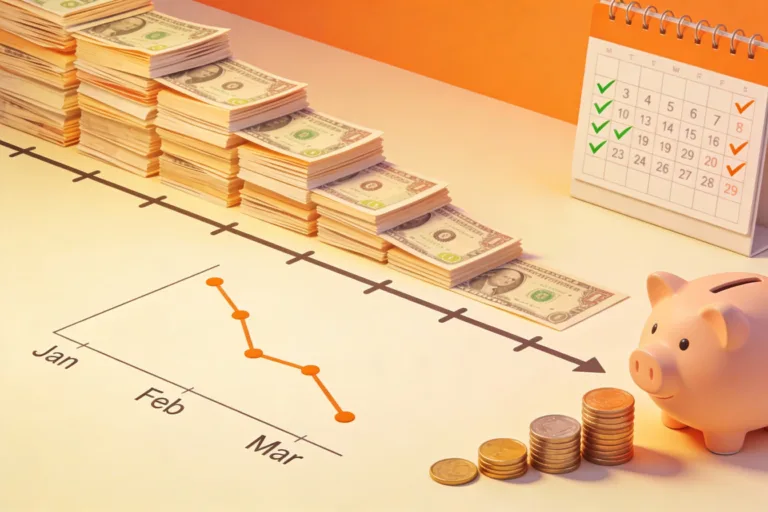
If you don’t track it, you’ll miss the wins. Make progress visible, because motivation loves proof.
- Create a simple tracker: a whiteboard, a note on your phone, or a printable thermometer chart.
- Celebrate every $500–$1,000 milestone with a tiny reward (coffee date, not a cruise).
- Review weekly. Ask: What worked? What stung? What’s the next tiny improvement?
Dealing With Setbacks
Life happens. Unexpected bills will crash your party. When that hits, pause extra payments, handle the emergency, and restart. You didn’t fail—you adapted. The only “fail” is quitting.
Example: A Simple Plan in Action
Let’s say you owe:
- $600 on Card A at 22% APR (min $25)
- $1,800 on Card B at 18% APR (min $45)
- $5,000 on a car loan at 6% APR (min $220)
You free up $250/month for extra payments. Using Avalanche:
- Pay minimums on all.
- Throw the $250 at Card A (highest APR) until it’s gone—about 2–3 months.
- Roll that entire amount onto Card B: $250 + $45 + $25 = $320/month.
- After Card B, roll everything onto the car. Debt drops like dominoes.
That’s the payoff “snowball” effect. It’s addictive—in a good way.
Mindset: The Part Everyone Skips

Debt payoff isn’t just numbers. It’s behavior and identity. You’re building the habit of finishing what you start.
- Say it: “I’m the kind of person who pays in full and on time.” Cheesy? Maybe. Effective? Yes.
- Pick your why: Peace of mind, travel, flexibility, building wealth. Remind yourself weekly.
- Default to delay: Want to buy something? Wait 48 hours. If you still want it, cool. If not, congrats—you just kept your future cash.
IMO, mindset beats spreadsheets over the long run.
FAQ
Should I save or pay off debt first?
Start with a mini emergency fund ($500–$1,500) so life doesn’t push you back into debt. Then focus on debt payoff. After you clear high-interest debt, ramp savings hard. It’s a sequence, not a tug-of-war.
Which is better: Avalanche or Snowball?
Avalanche saves money on interest. Snowball keeps you motivated with fast wins. The “best” plan is the one you’ll follow for months, not days. Pick one, commit, and adjust if your motivation dips.
What about consolidating my debt?
Consolidation can help if it lowers your interest rate, reduces your payment, and you won’t rack up new balances. Watch fees and terms. Don’t use consolidation as a reset button for overspending—pair it with a real plan.
How do I stop using my credit cards while paying them off?
Remove the temptation. Delete cards from online wallets, freeze physical cards, or use a debit-only rule for daily spending. Build a mini emergency fund so you don’t rely on credit for surprises.
How much extra should I pay every month?
As much as you can without creating new debt. Even $50–$100/month makes a big difference when you roll it forward. Automate the extra payment so you don’t “accidentally” spend it.
Is it okay to invest while I still have debt?
If your debt interest is high (say, 15%+), prioritize payoff first. That’s a guaranteed “return.” You can still capture employer 401(k) match if available—it’s free money. After high-interest debt is gone, increase investing aggressively.
Conclusion
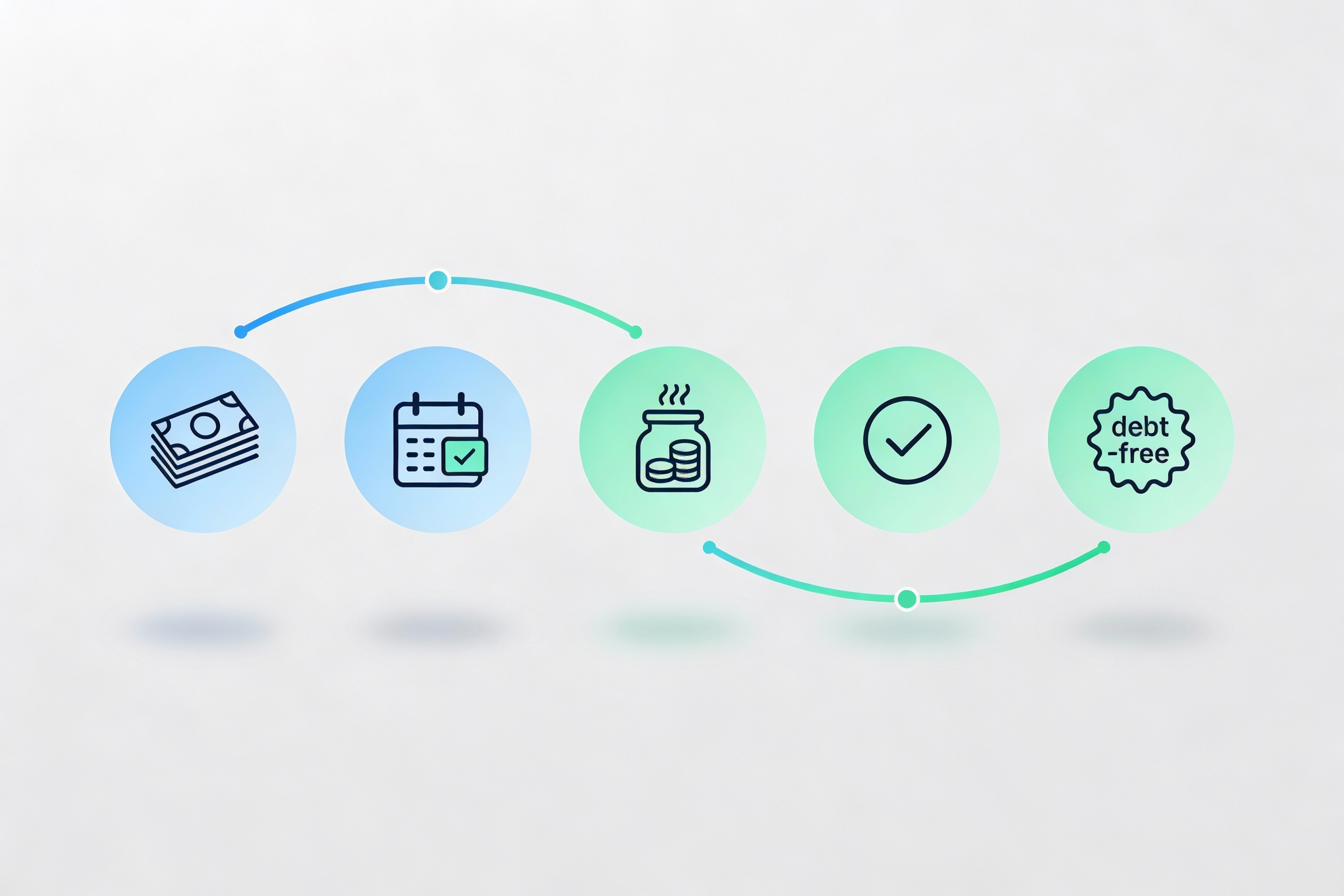
You don’t need a perfect plan—you need a simple one you’ll actually follow. Know your numbers, pick Avalanche or Snowball, automate the extra, and protect your progress with a mini emergency fund. Track, adjust, and keep going. Do that, and your debt won’t stand a chance.