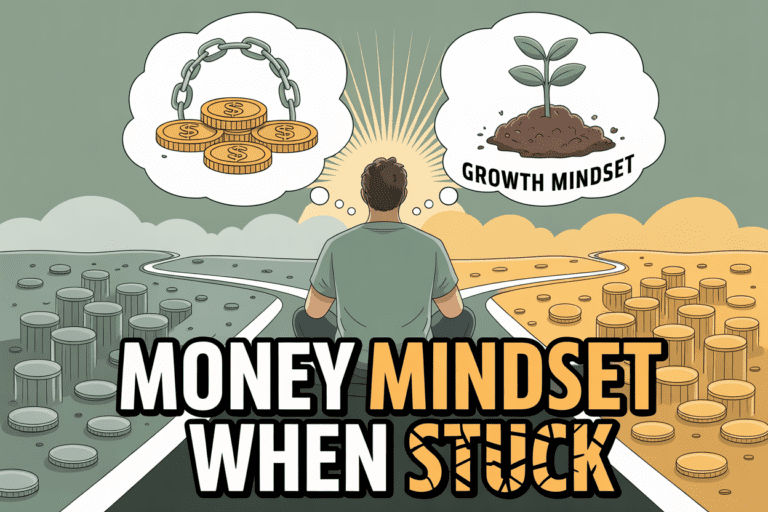

Money Mindset for People Who Feel Behind: Reclaim Your Path
I used to think money was a secret club with a secret handshake. Turns out the real barrier is mindset, not math. If you feel behind, you’re not broken—you’re just missing a map. Let’s redraw it together, one practical shift at a time.
What “being behind” actually costs you
You wake up thinking you’re late to the game, but the game hasn’t stopped moving. Bills, tuition, rent, that unexpected car repair—life throws curveballs, not a straight path to a six-figure wage. The real drain isn’t the deficit, it’s the story you tell yourself about it. If you believe you’re behind, you’ll act like it. If you believe you can catch up, you’ll start making different choices.
Reframe money as a skill, not a sprint

Money isn’t a personality trait you’re born with. It’s a skill you can learn, practice, and improve—just like cooking or learning a new hobby.
- Track what actually comes in and goes out every month. No guessing.
- Ask yourself where your money goes on autopilot and cut the obvious leaks.
- Set tiny, concrete targets. Think: “save $50 this week” instead of “be rich someday.”
Why tiny targets? They create momentum without overwhelming you. FYI, momentum beats motivation when life gets messy.
Subtle shifts that matter
– Celebrate small wins. Even a saved coffee budget counts.
– Trade perfection for progress. If you miss a goal, analyze, adjust, try again. No guilt trips required.
– Name your money goals aloud. Saying, “I want to build an emergency fund of $1,000” makes it real.
Build a money operating system, not a one-off hack
Hunting for a shortcut feels good, but most people who actually move forward build systems. A system is a repeatable approach that works even when you don’t feel like it.
- Automate the boring stuff: automatic transfers to savings, auto-pay bills, default investing contributions.
- Create a weekly money check-in: 15 minutes, same day each week. No drama, just data.
- Use a simple budgeting framework: “needs, wants, savings, debt” in that order.
Automation reduces decision fatigue. If you hate math, you don’t need to love it—just let automation handle the heavy lifting.
Simple budgeting framework
– Needs: rent, utilities, groceries, transport.
– Wants: dining out, streaming, small luxuries. Keep this capped.
– Savings: emergency fund, retirement, big goals. Prioritize this early in the month.
– Debt: tackle high-interest first, then snowball if that motivates you.
Mindset tweaks that actually move the needle

Your inner monologue matters more than you think. If your brain keeps score with “I’m behind, I’ll never catch up,” you’ll act accordingly. Let’s flip the script.
- Replace scarcity with abundance language. Rather than “I can’t afford that,” say “I’m choosing to spend here to get this value.”
- Neutralize shame. Money mishaps aren’t moral failings; they’re data points. Learn from them, don’t weaponize them.
- Adopt a growth mindset: you can change your situation with small, deliberate steps. Even tiny steps compound.
IMO, the best money mindset shift is turning money from a secret worry into a transparent conversation you have with yourself—and a trusted friend or coach.
The “two voices” drill
When a fear-based thought shows up, name it. Then counter with the practical plan. For example:
– Fear: “I’ll never catch up.”
– Plan: “I’ll automate $20 into savings this week and review expenses on Sunday.”
Practical strategies for immediate impact
Actionable moves beat wishful thinking every time. Here are some quick wins you can implement this week.
- Round up every purchase to the nearest dollar and stash the difference.
- Negotiate one bill this month. It sounds small, but it changes your money story.
- Use a no-spend day or week to reset habits without severing joy.
- Find a financial buddy. Share goals, hold each other accountable, celebrate wins.
FYI, you don’t have to become a spreadsheet wizard to win. A simple app, or a notebook, works if you actually use it.
Debt-smarter, not debt-avoider
– List all debts with interest rates.
– Prioritize high-interest debts first if the psychology helps you stay motivated.
– Consider a consolidation or a structured payoff plan if it reduces friction and confusion.
Income tweaks that aren’t exhausting

If you’re feeling behind, you might think you need a $20k raise tomorrow. Realistically, small improvements add up.
- Upskill strategically: pick one marketable skill that raises your value in your current role or a side hustle.
- Leverage existing strengths: freelance, tutoring, or advisory gigs that fit your schedule.
- Ask for growth conversations at work. You won’t get what you don’t request.
Remember, you don’t have to quit your job to improve your money situation. Incremental improvements compound faster than you expect.
Side hustle sanity check
– Choose something aligned with your strengths.
– Set a clear cap on time.
– Treat it as a learning lab, not a lifeline. The goal: extra cash, not extra burnout.
Consistency beats intensity in the long haul
You’ll have days when you want to binge-watch and pretend responsibilities don’t exist. That’s totally normal. What matters is showing up more often than you skip.
- Protect your time and energy. Tiny, repeatable actions beat big, sporadic efforts.
- Review, reflect, and tweak weekly. Don’t wait until a crisis to adjust.
- Build rituals around money—before bed or first thing on Monday. Rituals are belief-builders.
If someone told you a year from now you’d be in a different place, would you believe it? With a steady rhythm, the answer can be yes.
Ritual ideas that stick
– Sunday snapshot: glance at bank balances, set one goal for the week.
– Midweek check-in: 5-minute pause to adjust if you’re off track.
– Reward system: small, harmless rewards for meeting weekly targets.
FAQ
Is it really possible to catch up if I started far behind?
Yes. It’s about consistent, tiny improvements that compound. You don’t need a dramatic windfall—just steady progress, week after week. Start with one automatic saving rule and a weekly money check-in.
What if I have debt and feel stuck?
Begin with a clear list of all debts and the interest rates. Pick a strategy that suits you—high-interest first, or a balance transfer if that makes sense. Then automate payments and commit to a minimum monthly amount you can grow over time. Small wins in debt payoff feel amazing.
How do I stay motivated without burning out?
Set micro-goals, celebrate small wins, and remove decision fatigue with routines. Schedule your money work like you would a workout. If motivation wanes, rely on automation and accountability buddies to keep you moving.
What should I do if money mistakes trigger shame?
Separate identity from behavior. A mistake is data, not a verdict on you. Journal what happened, what you learned, and the exact step you’ll take next time. Shame is a luxury you can’t afford to keep around.
Can I pursue big goals while feeling behind?
Absolutely. Break big goals into bite-sized milestones. Each milestone is proof you’re moving forward. IMO, the trick is to celebrate progress, not perfection.
Do I need to cut all fun to get ahead?
Not at all. You can design a budget that includes fun—just priced in. If you’re having fun without breaking the bank, you’ll stick with it longer.
Conclusion
Being behind isn’t a life sentence; it’s a signal to adjust your approach. Start with small, repeatable steps, build a simple system, and reframe money as a skill you can master. You don’t need a miracle—just consistency, a bit of humor, and a plan you actually enjoy following. If you stay curious and kind to yourself, you’ll see progress sooner than you think. Let’s turn that setback into setup for something better.